Good Bones: How an Old Two-Horse Trailer Became Part of the Easy Peasy Pantry Story
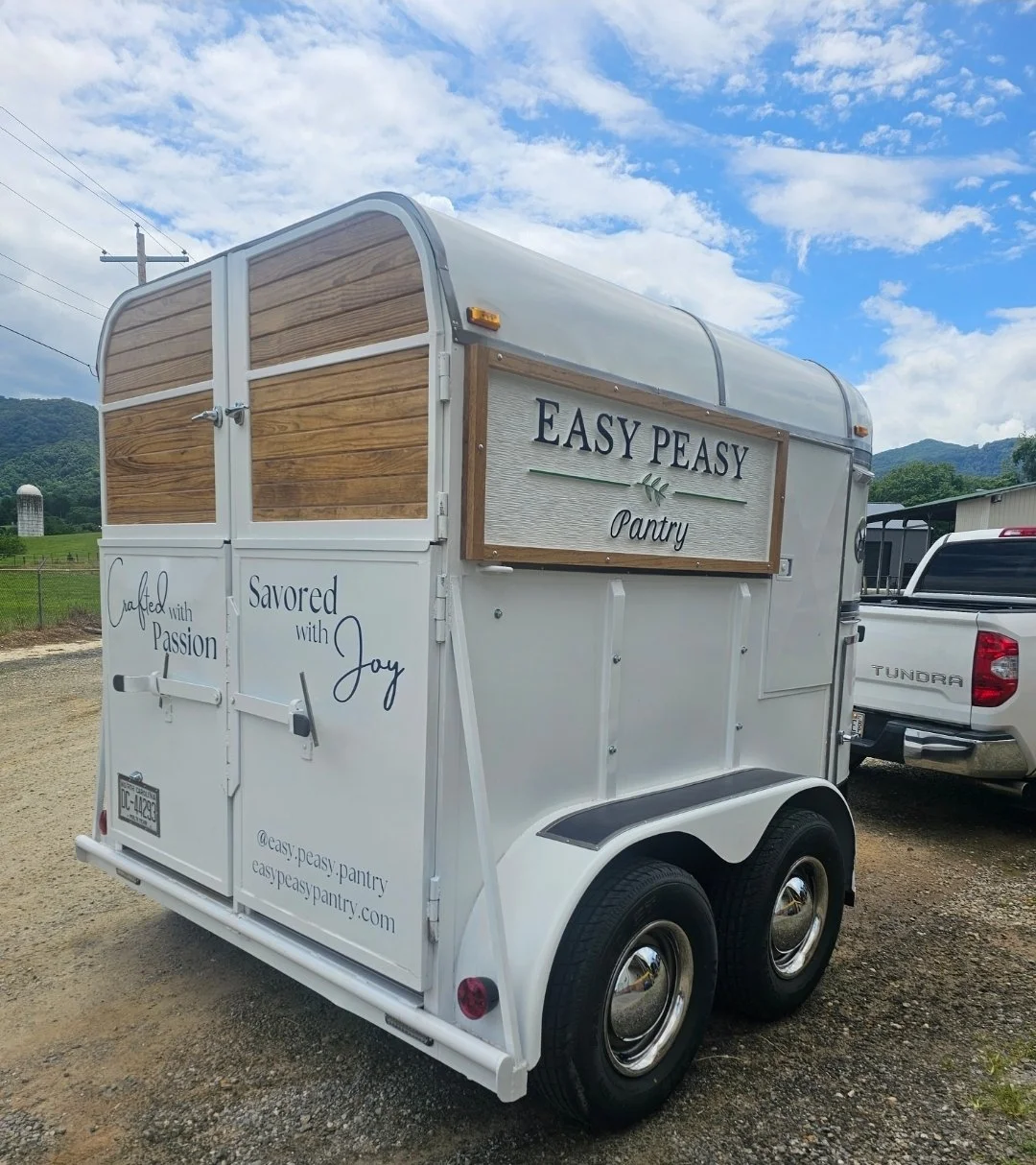
If you've followed Easy Peasy Pantry for very long, chances are you've seen her.
Our market and delivery trailer.
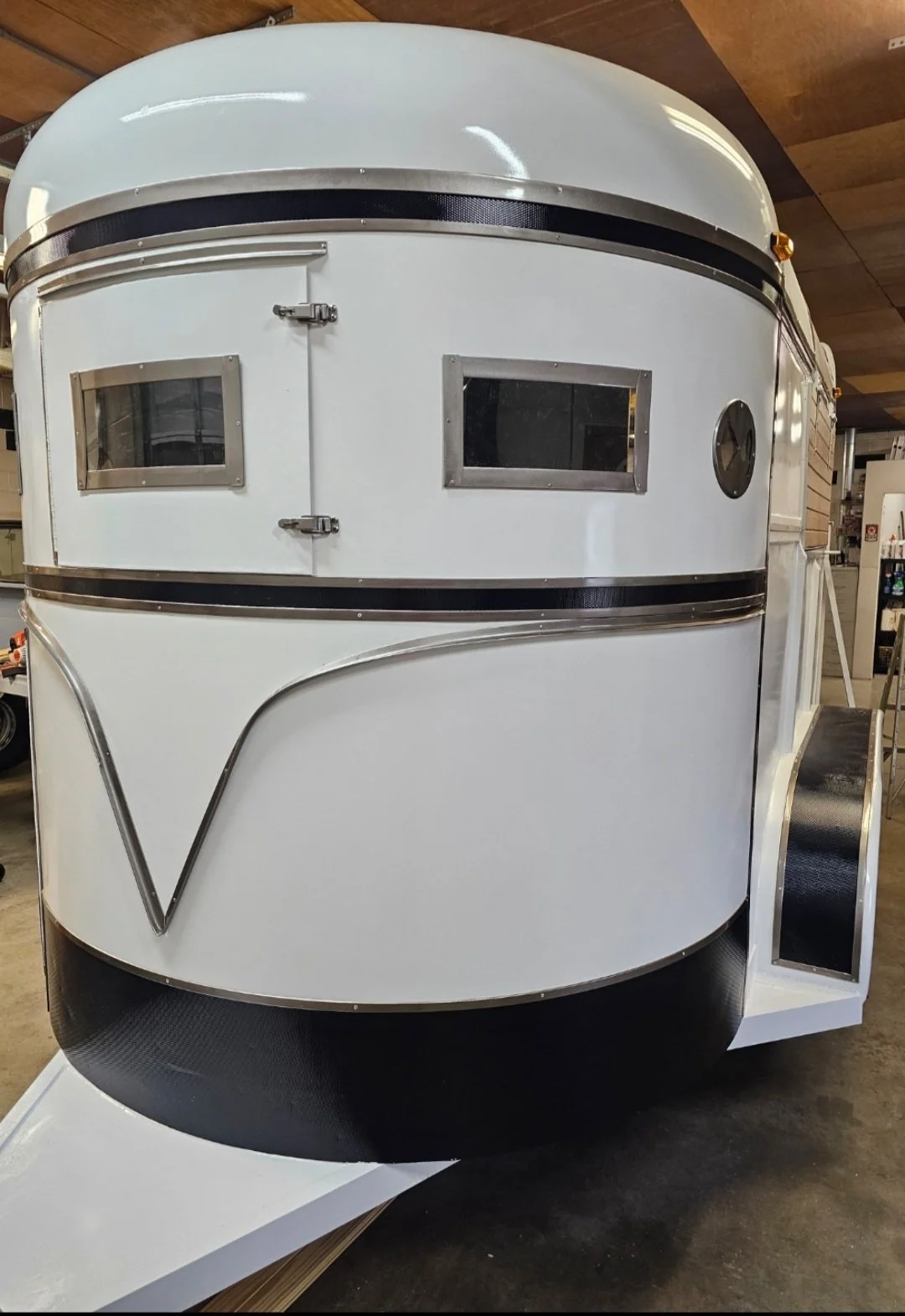
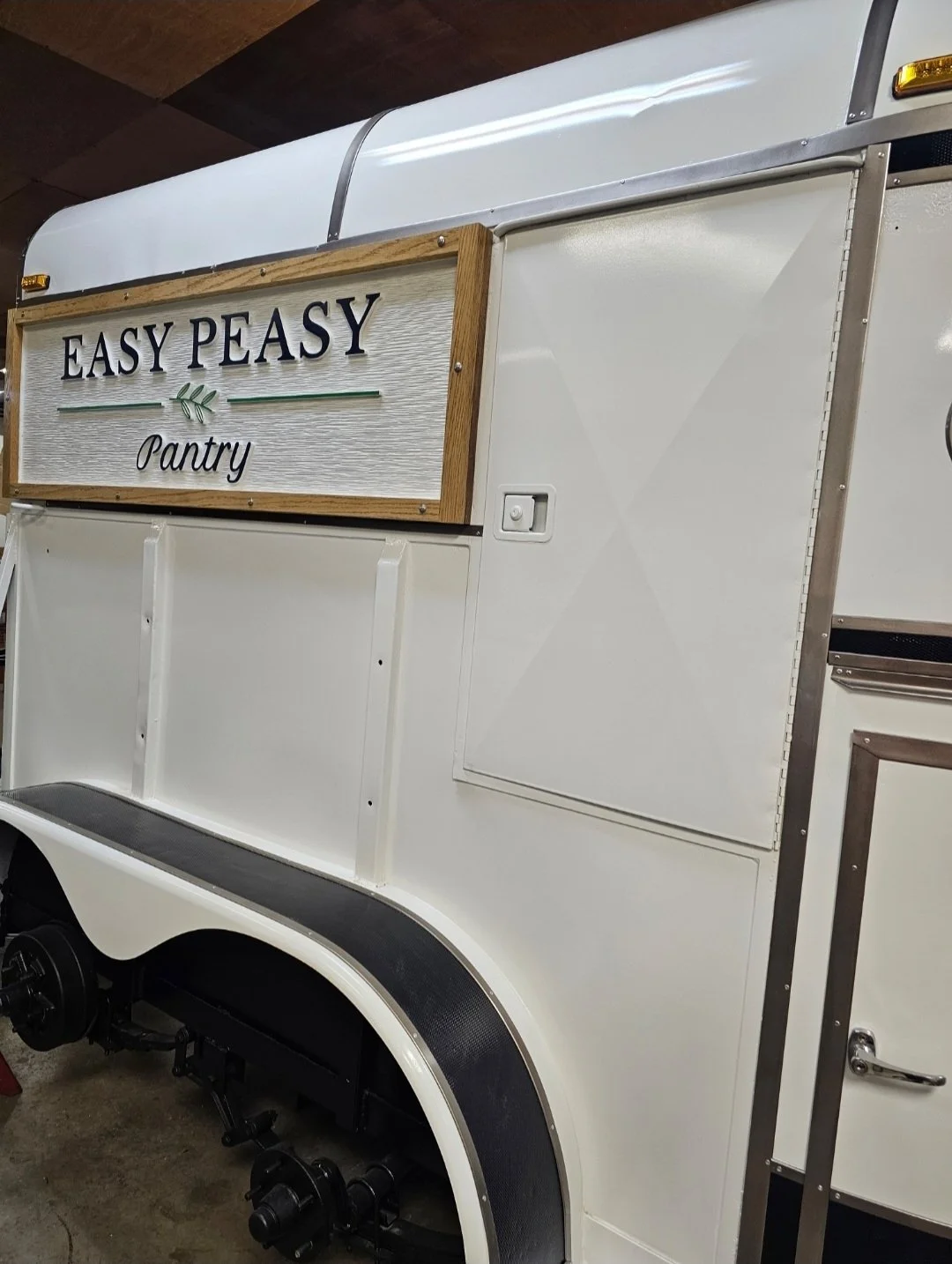
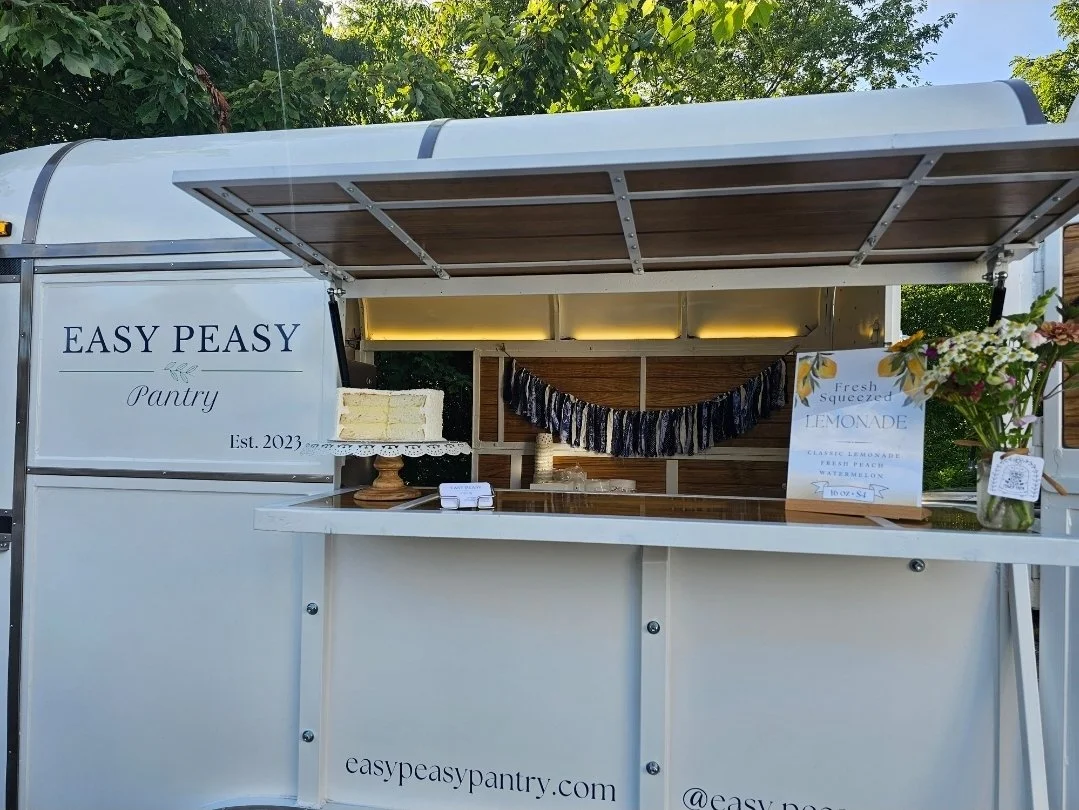
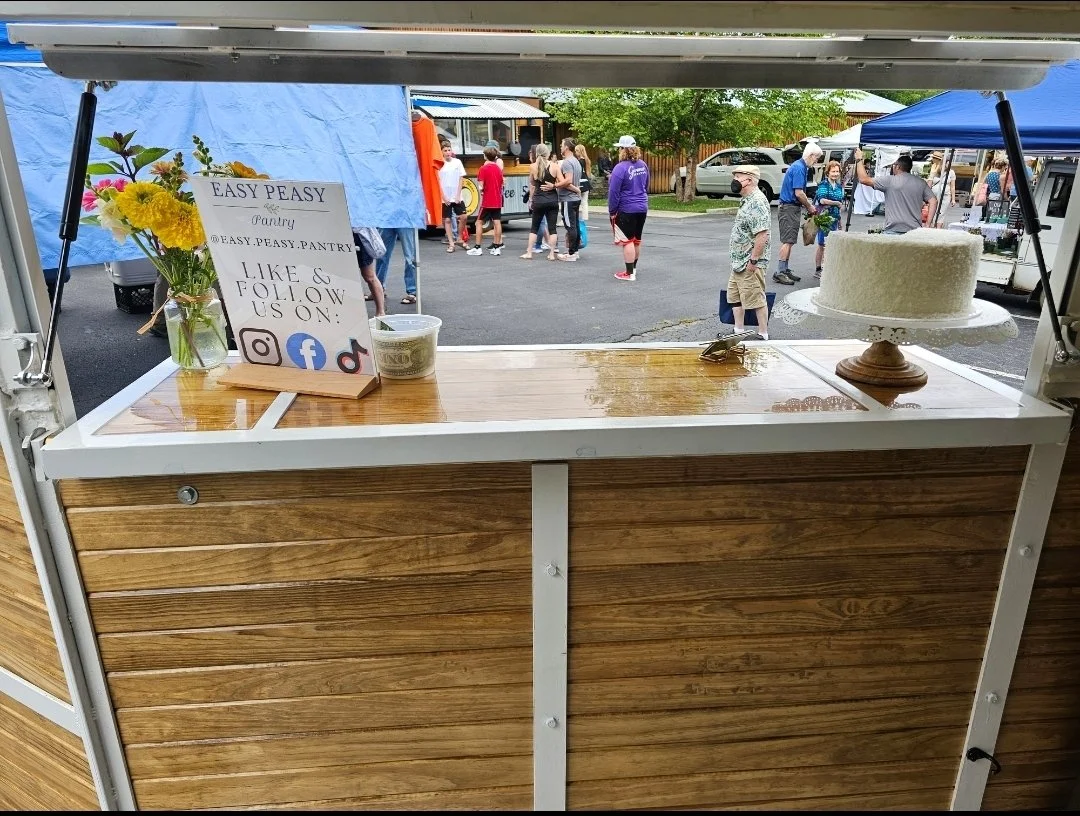
Today, she's polished, recognizable and unmistakably ours. She's been part of markets, deliveries, photographs and countless memories we've made while building this business.
But she didn't always look like this.
Not even close.
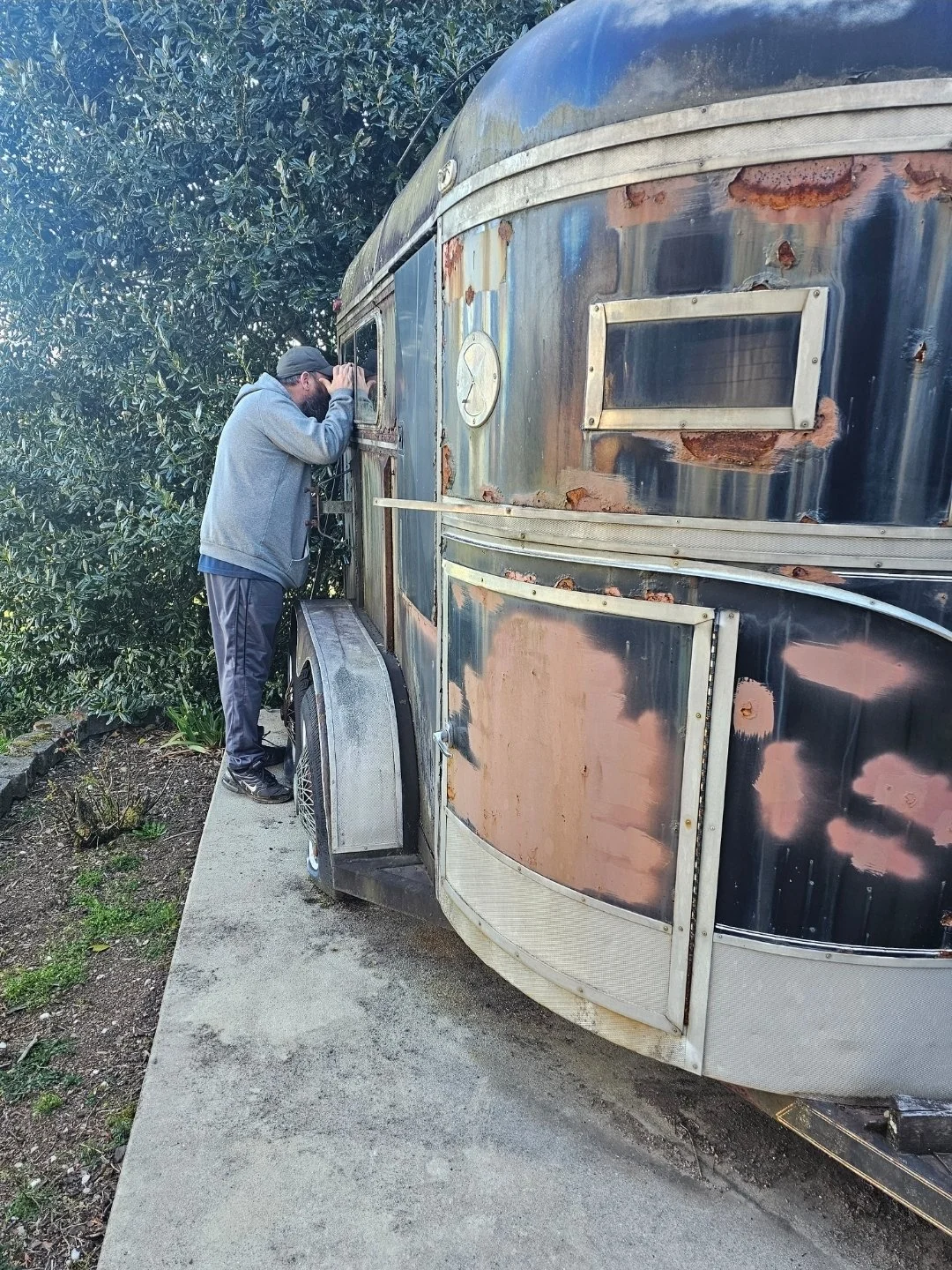
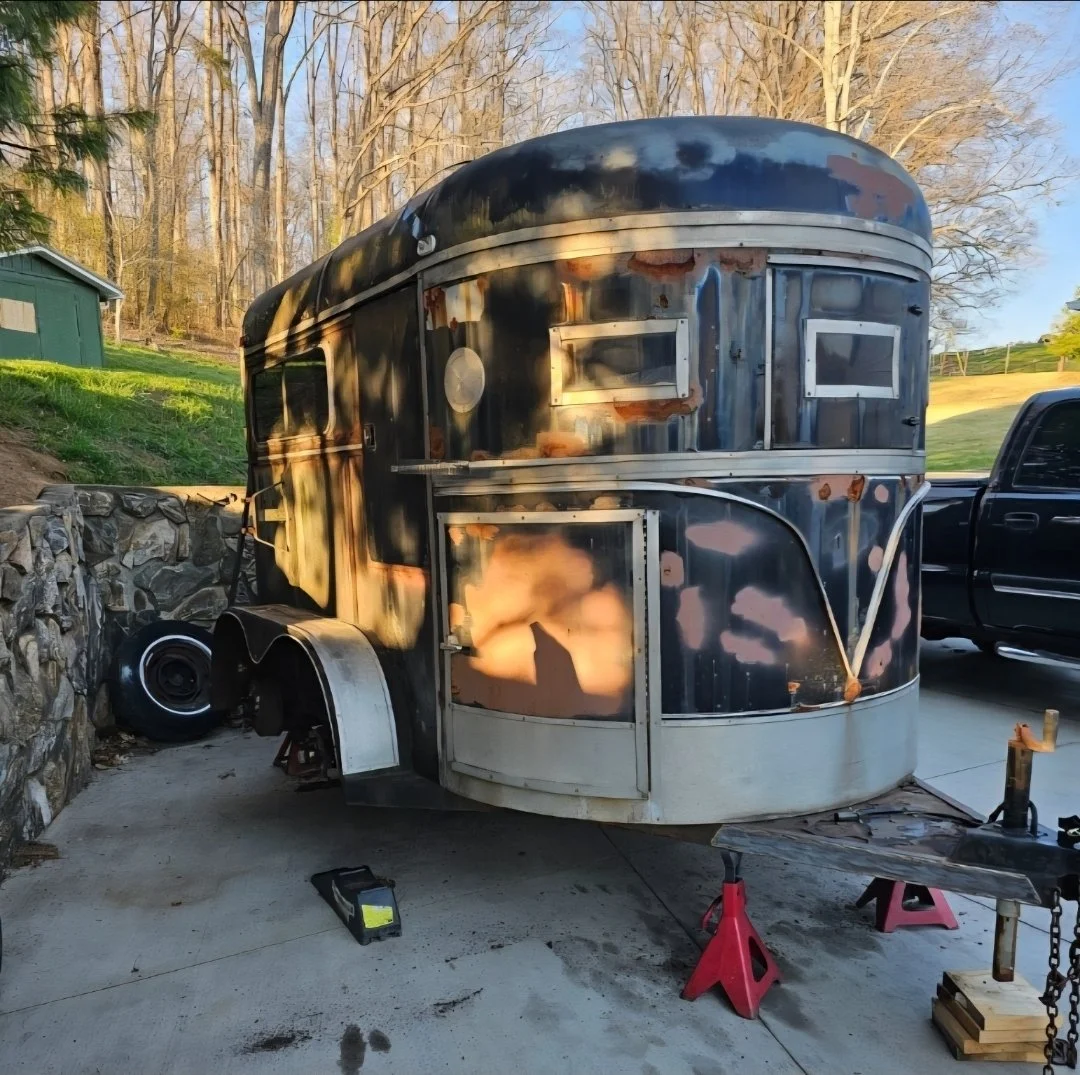
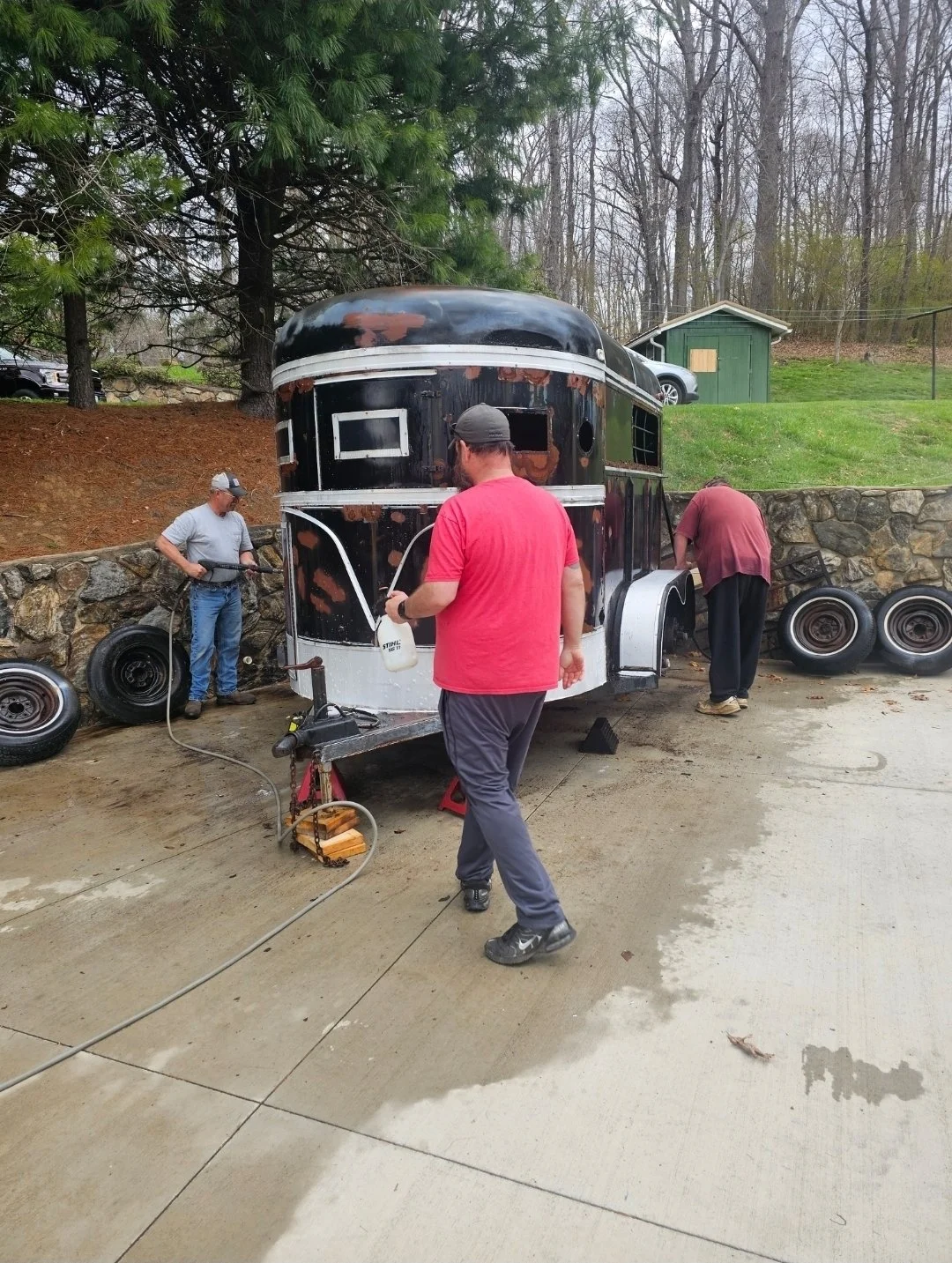
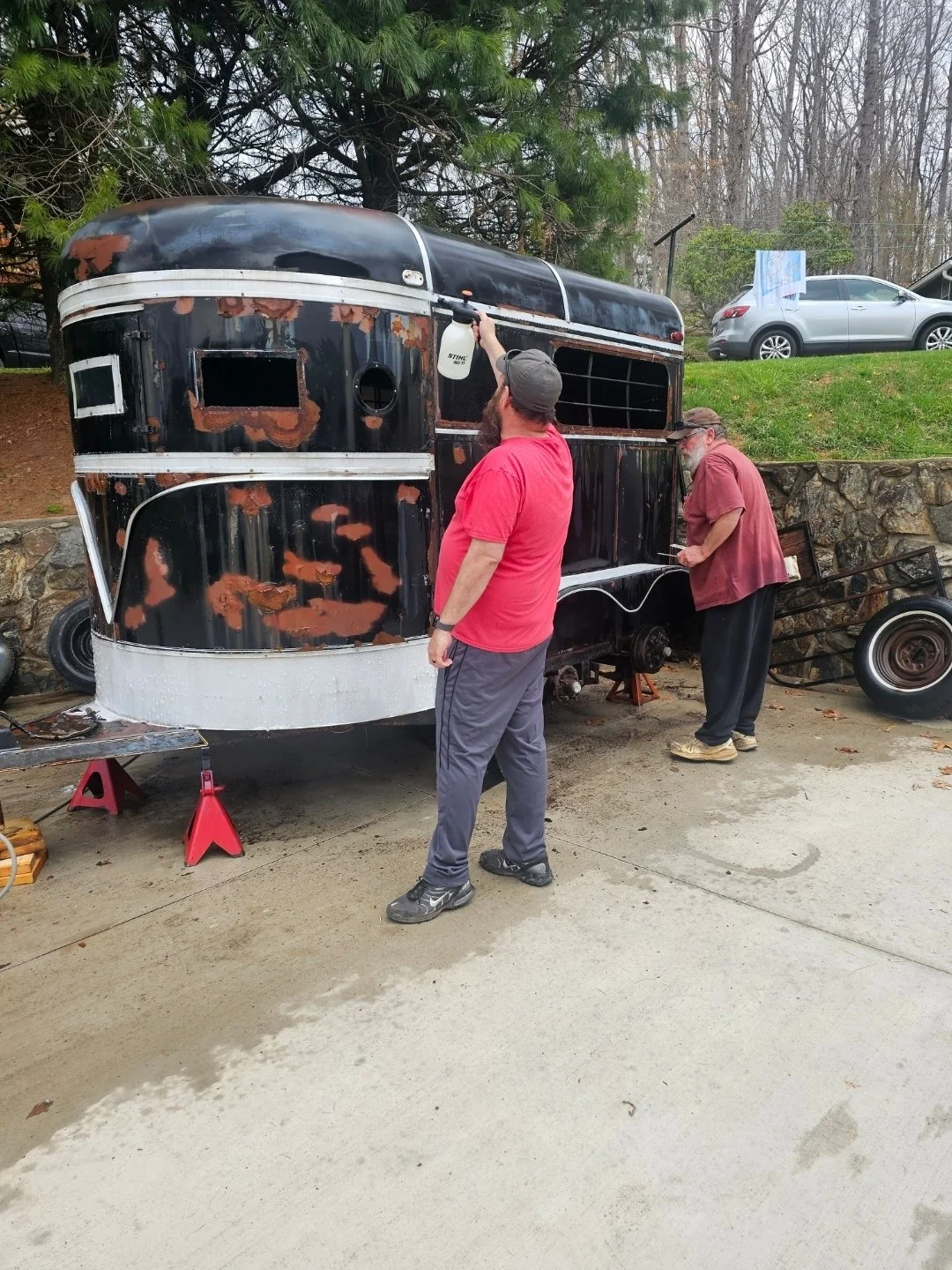
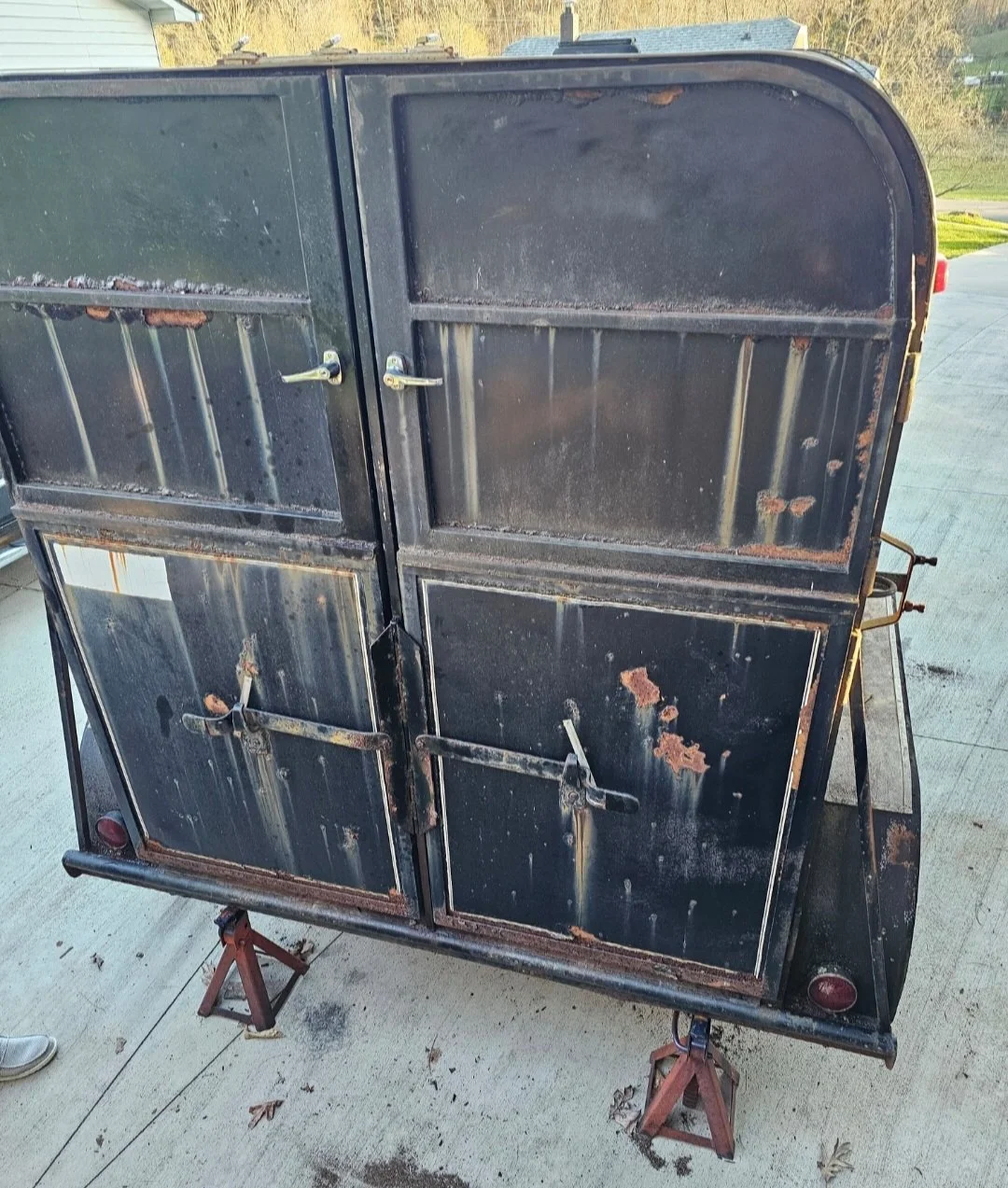
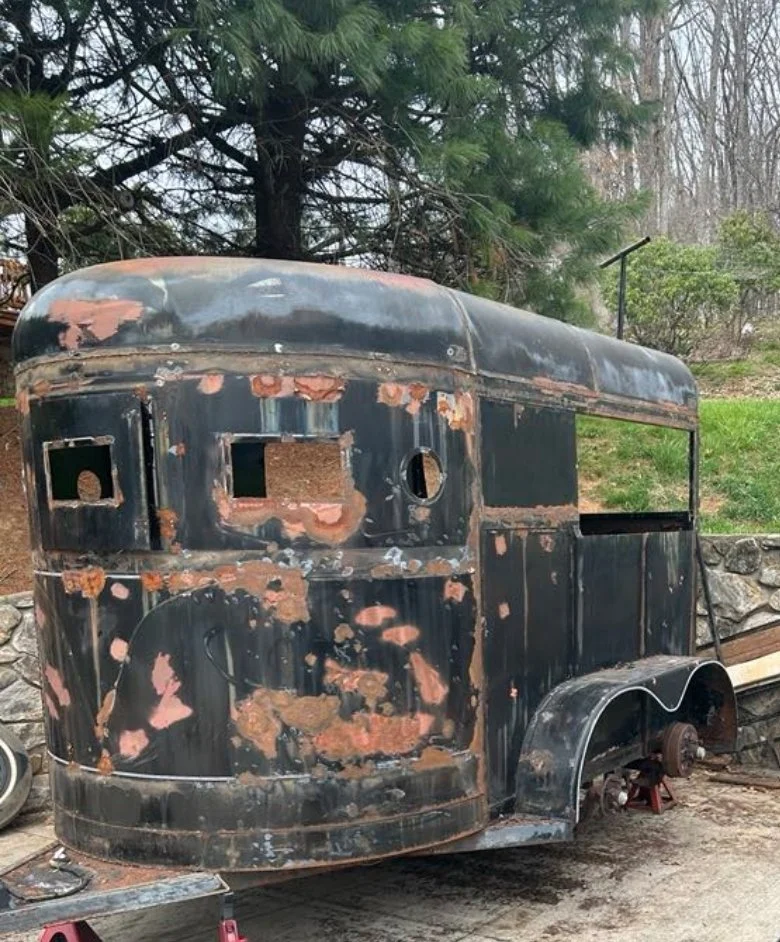
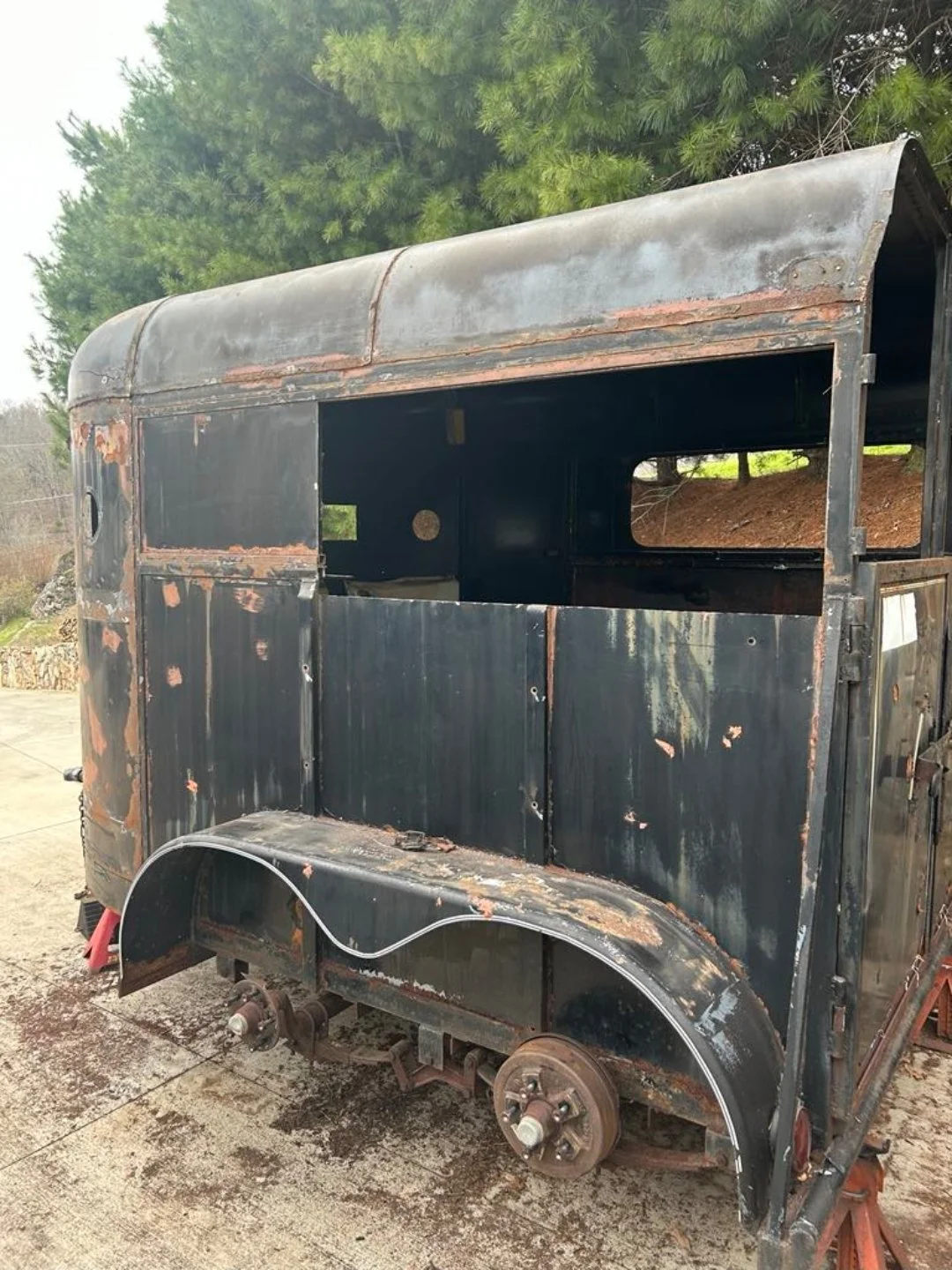
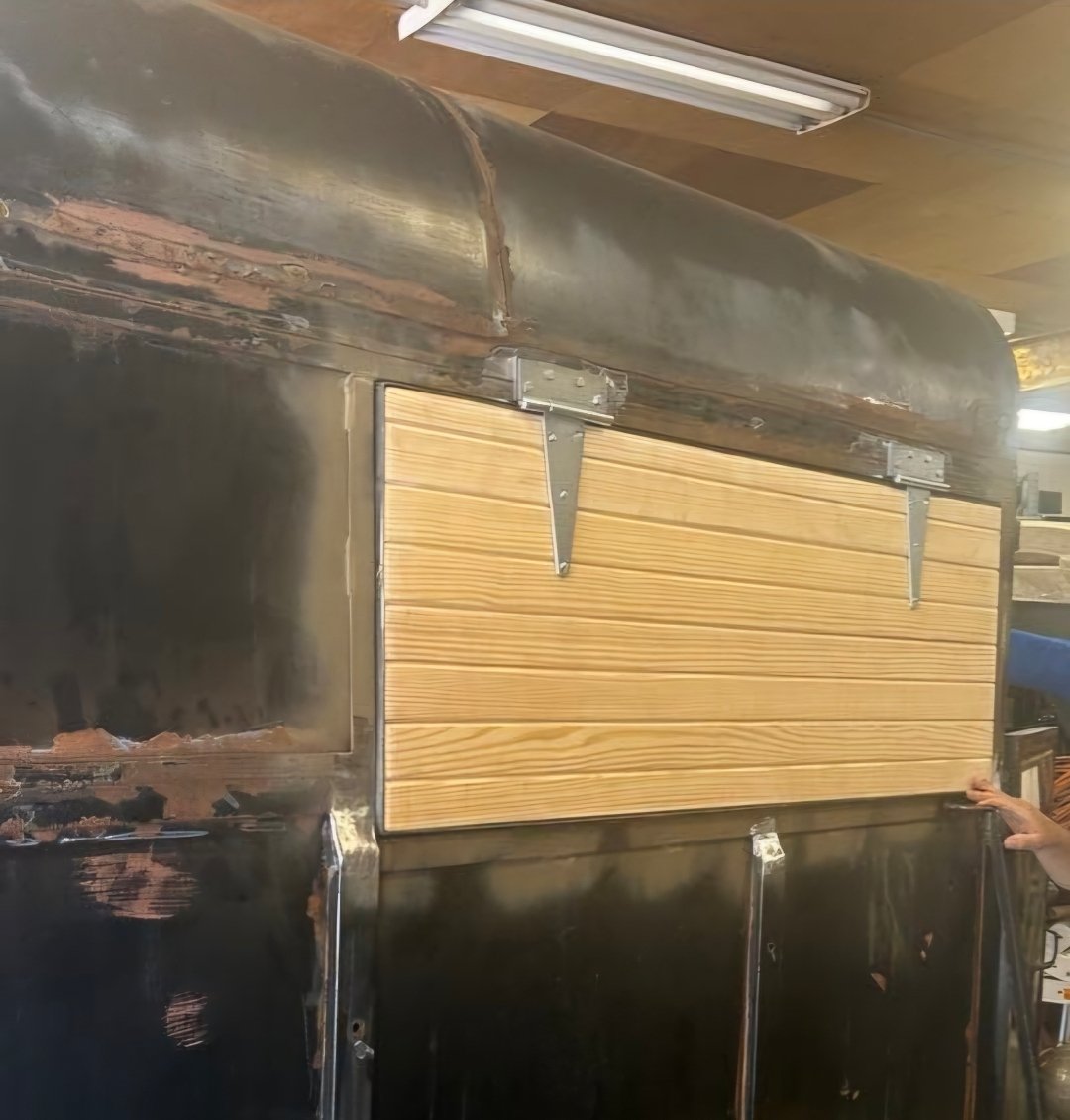
Before she became part of Easy Peasy Pantry, she was an old two-horse trailer—black with silver trim and enough rust that saying she had "a few rusty spots" would have been incredibly generous.
There was rust in more spots than not.
She was tired. She was rough. She needed an enormous amount of work.
But she had good bones.
And apparently, in our family, that's enough reason to start a project.
What happened next wasn't a quick makeover.
It became a full-blown restoration involving welding, grinding, sandblasting, fabrication, electrical work, flooring, bodywork, paint, woodworking, signage and a whole lot of problem-solving.
Most importantly, it became a family project.
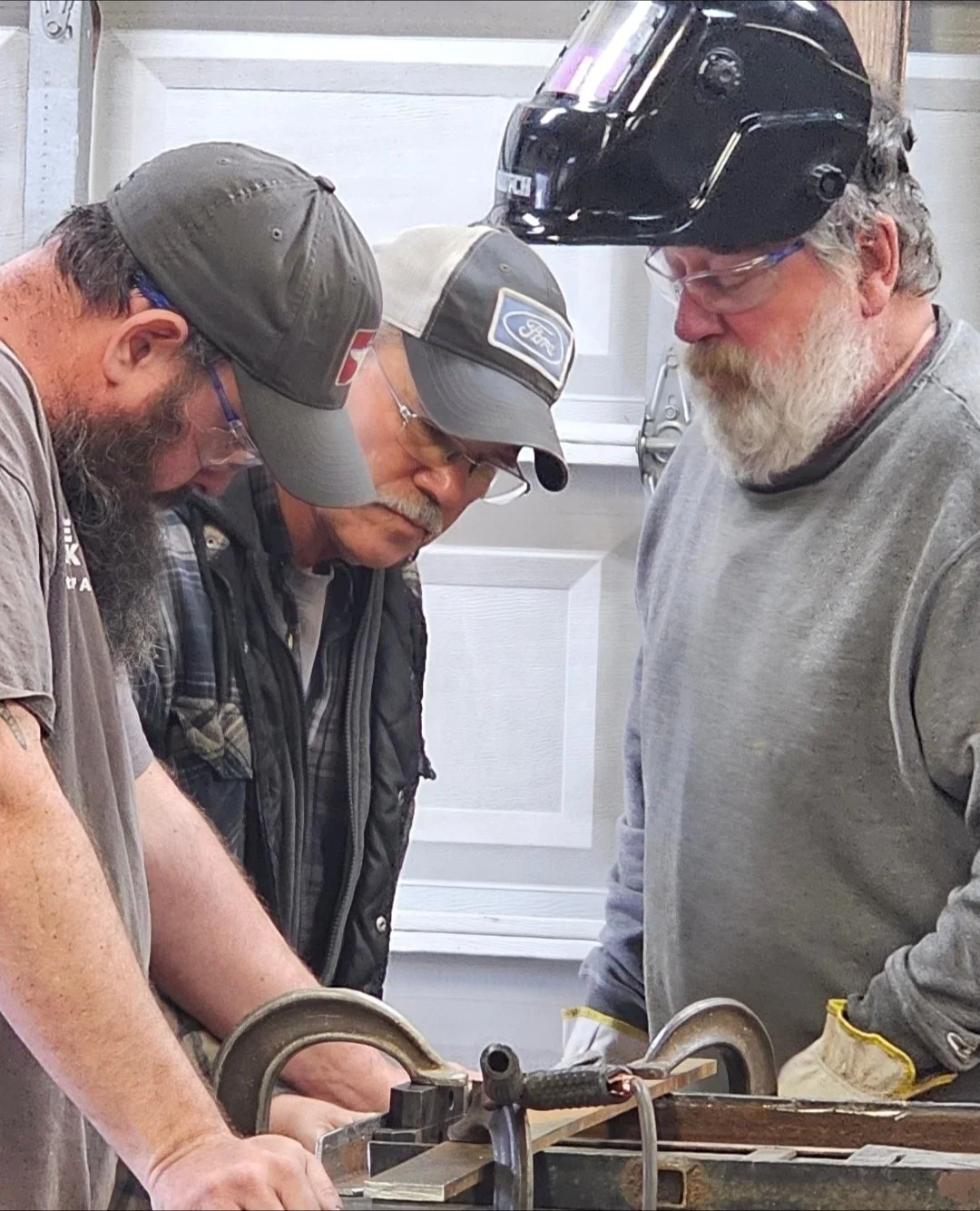
At the center of it were three men: my dad, John; my best friend's dad, Kenny, who has always been like a second dad to me; and my husband, Chad.
All three had their hands on this trailer.
And then, along the way, some incredibly talented friends and craftspeople stepped in and left their fingerprints on it, too.
This is the story of how an old horse trailer became our dream market and delivery trailer.
And like most things at Easy Peasy Pantry, it started with making the most of what we had.
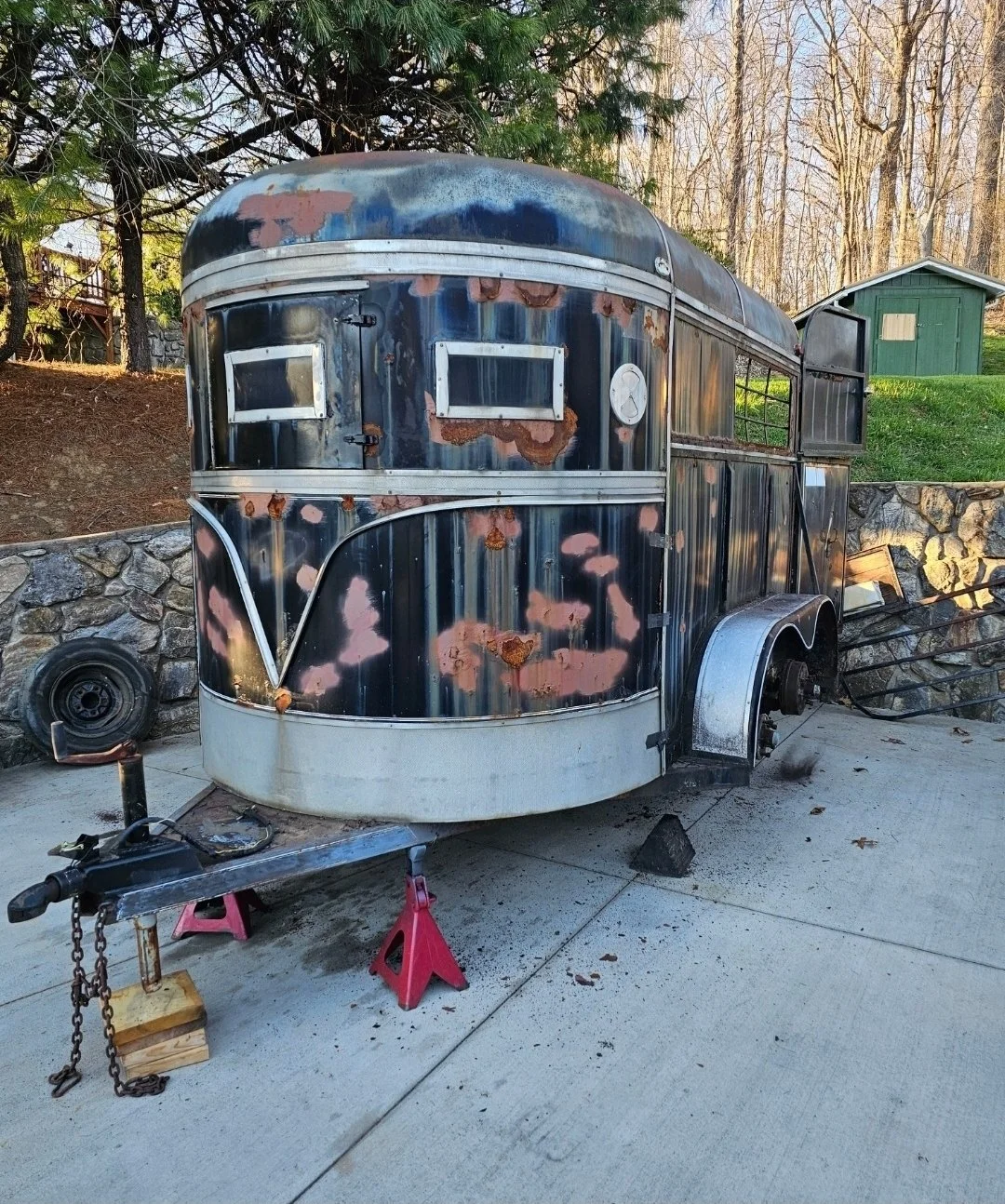
Day one
Stage One: Looking Past the Rust
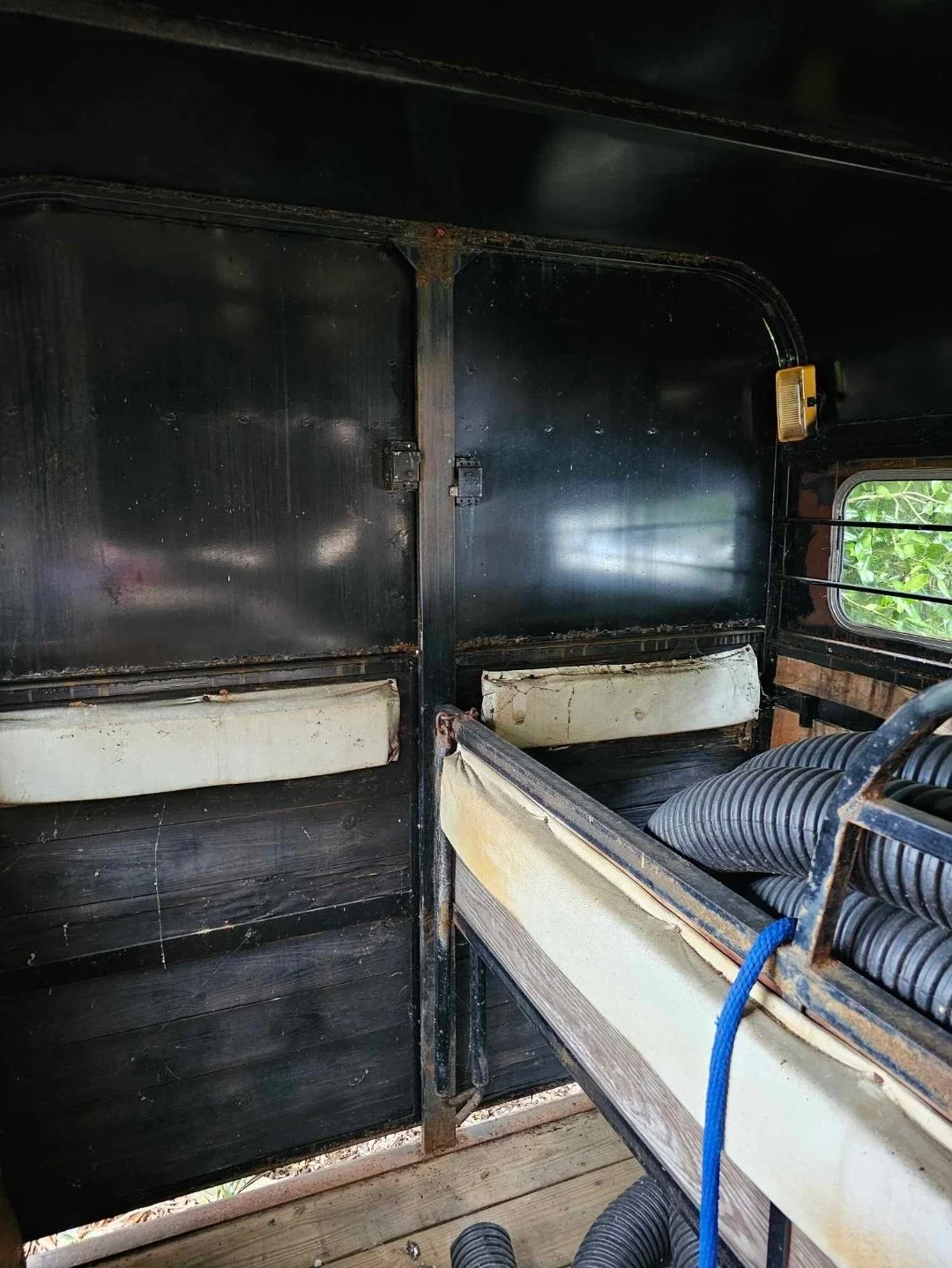
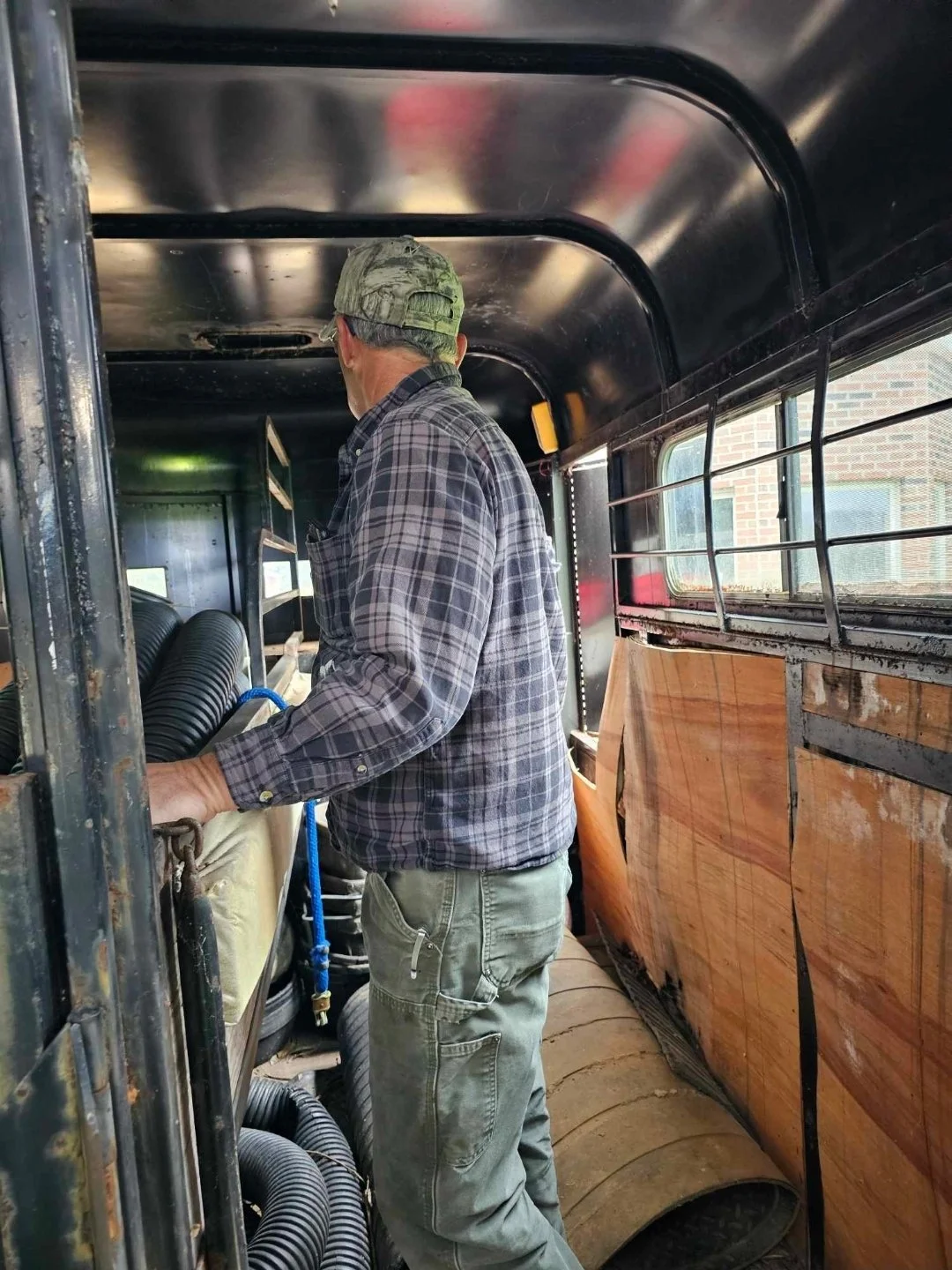
You needed a little imagination when you looked at the trailer in the beginning.
Okay.
Maybe a lot of imagination.
She was black with silver trim, but the rust had become nearly as prominent as either color.
This wasn't a situation where we could knock off a couple of rusty spots, throw on some paint and call it restored.
The years had left their mark.
If this trailer was going to become what we imagined, we had to get all the way down to what was underneath.
So Dad called in a friend who could sandblast it.
And when we say sandblast, we mean the entire trailer—from the inside out.
Years of old finish, corrosion and rust had to come off before anything new could go on.
It's one of those stages of a restoration that doesn't make for the glamorous "after" photograph, but everything that comes afterward depends on it.
Before we could make her beautiful, we had to find those good bones again.
Once the sandblasting was finished, there was nowhere for the trailer's problems to hide.
Now Dad, Kenny and Chad could begin rebuilding.
Stage Two: A Horse Trailer Has to Stop Being a Horse Trailer
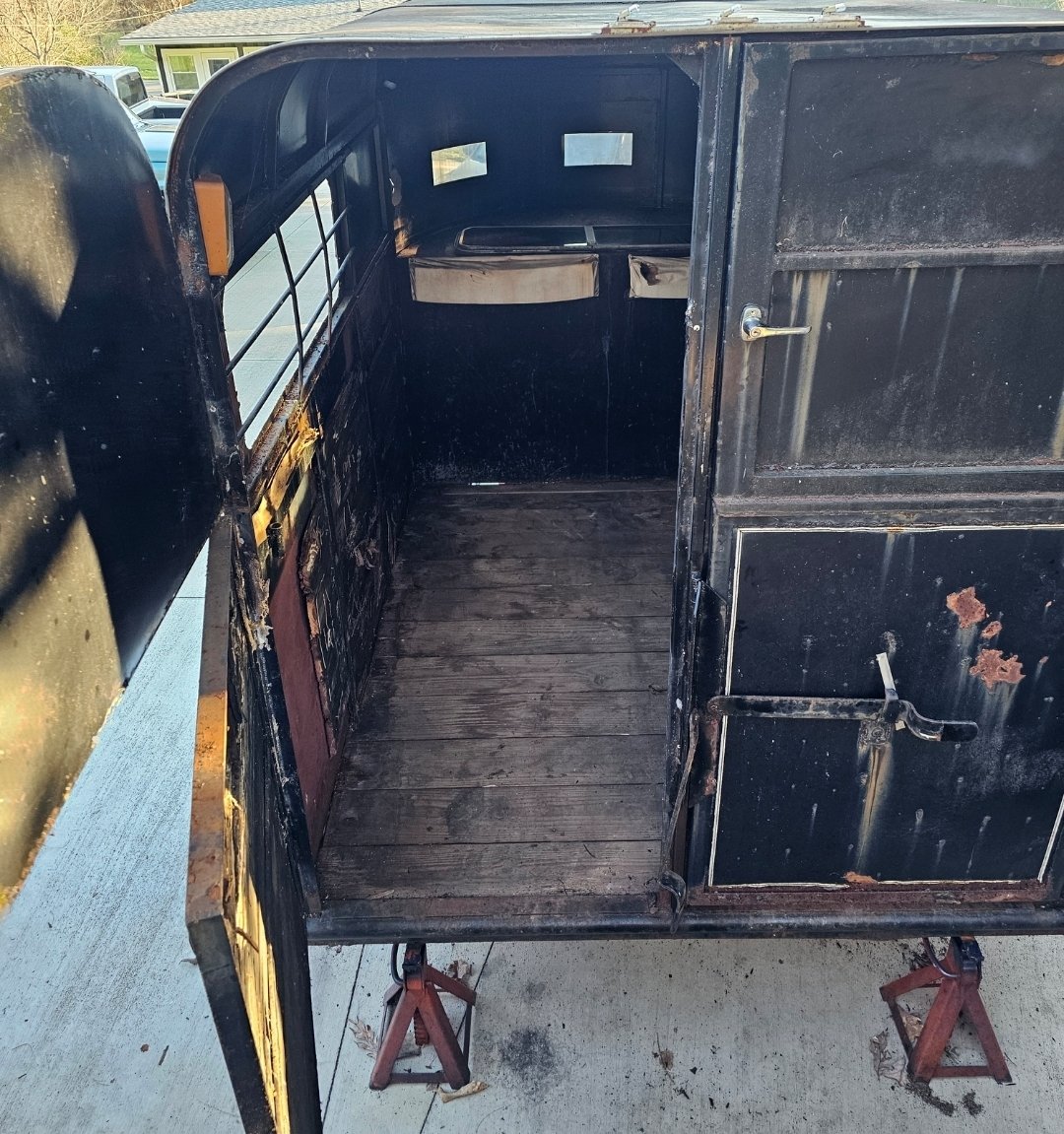
One of the first major changes happened inside.
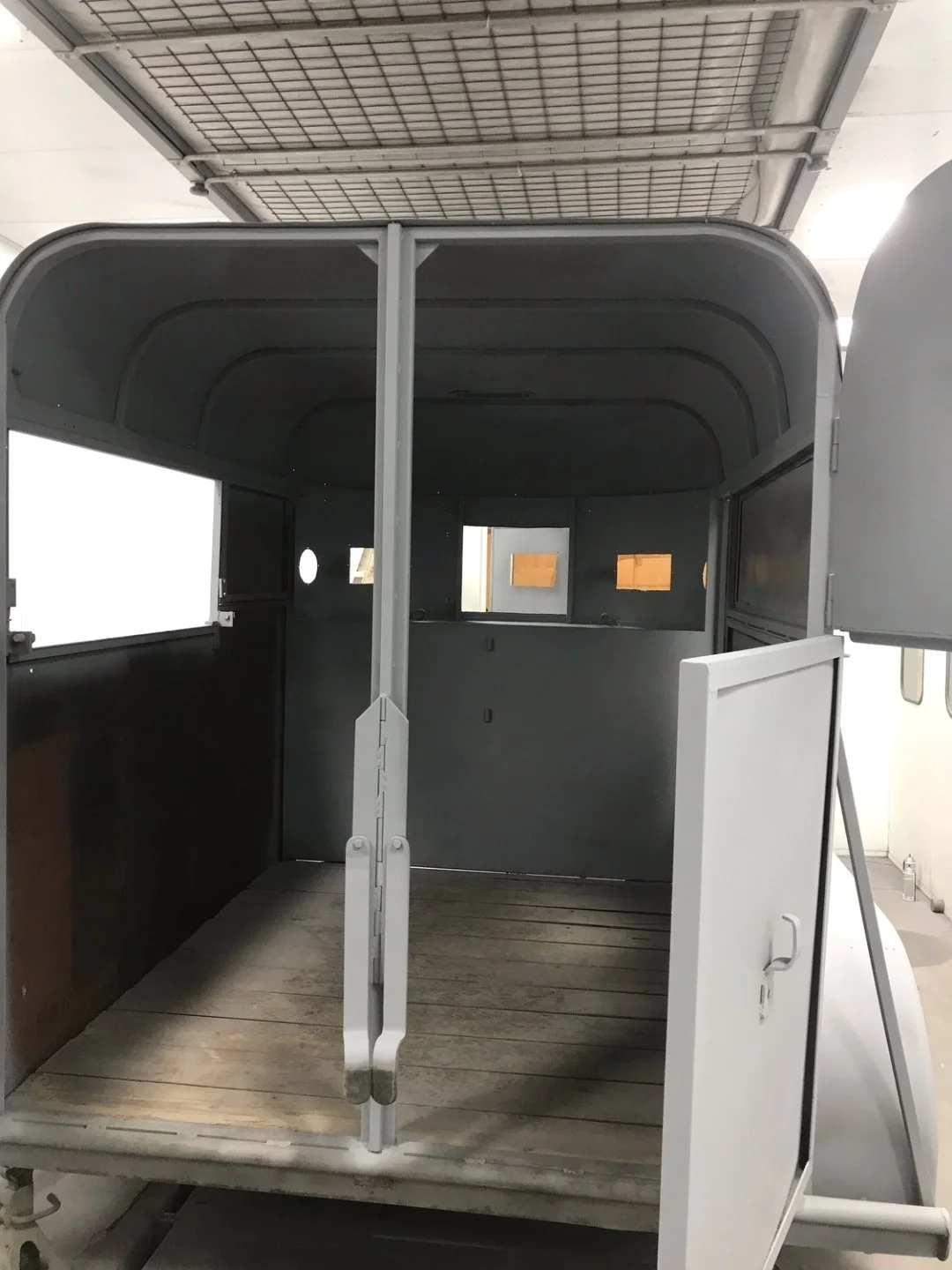
A two-horse trailer is built for exactly what its name suggests: hauling two horses. Down the middle was a metal partition designed to separate them.
We obviously weren't going to need that anymore.
Dad removed it.
But this is where his way of thinking really started showing up in the project.
That old partition wasn't simply thrown into a scrap pile.
It became part of the new trailer.
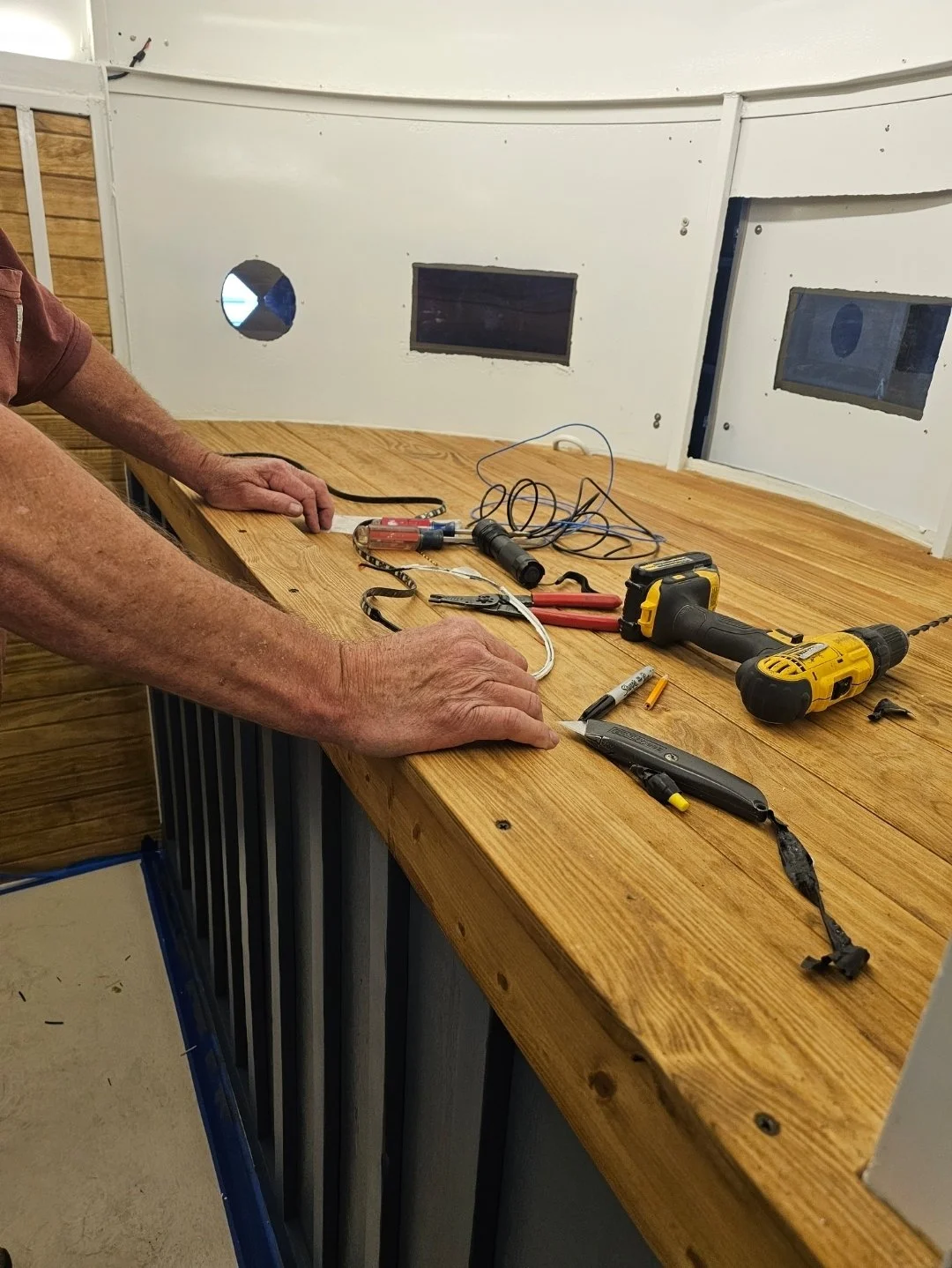
Dad repurposed the metal from the center partition and used it to fabricate the frame for our service window and the countertop.
Think about that for a second.
A piece of metal whose original job was separating two horses became the framework for the place where we would eventually stand and serve customers.
We love that.
There is something almost poetic about it now.
We weren't trying to erase everything this trailer had been.
We were taking what was useful from its first life and building it into its second.
Stage Three: Cut, Weld, Grind, Repeat
This was the stage where the vision had to become something real.
Dad and Kenny handled much of the welding. Dad spent hour after hour grinding and sanding. Chad worked alongside Dad on much of the metalwork as the trailer's new layout began taking shape.
And projects like this rarely go exactly according to plan.
You're working with an existing structure, not starting with a clean sheet of paper.
Something doesn't fit.
Something isn't square.
A piece needs to be cut.
Another needs to be welded.
Then ground smooth.
Then adjusted.
Then you stand back, look at it and figure out what comes next.
Dad, Kenny and Chad worked through those problems one at a time.
There wasn't a catalog where we could order an "Easy Peasy Pantry Horse Trailer Conversion Kit."
They were figuring it out.
Building it.
Making it work.
The service area began taking shape. The metalwork started looking intentional. What had been designed around horses was slowly being redesigned around people, food, markets and the way we actually needed to use the space.
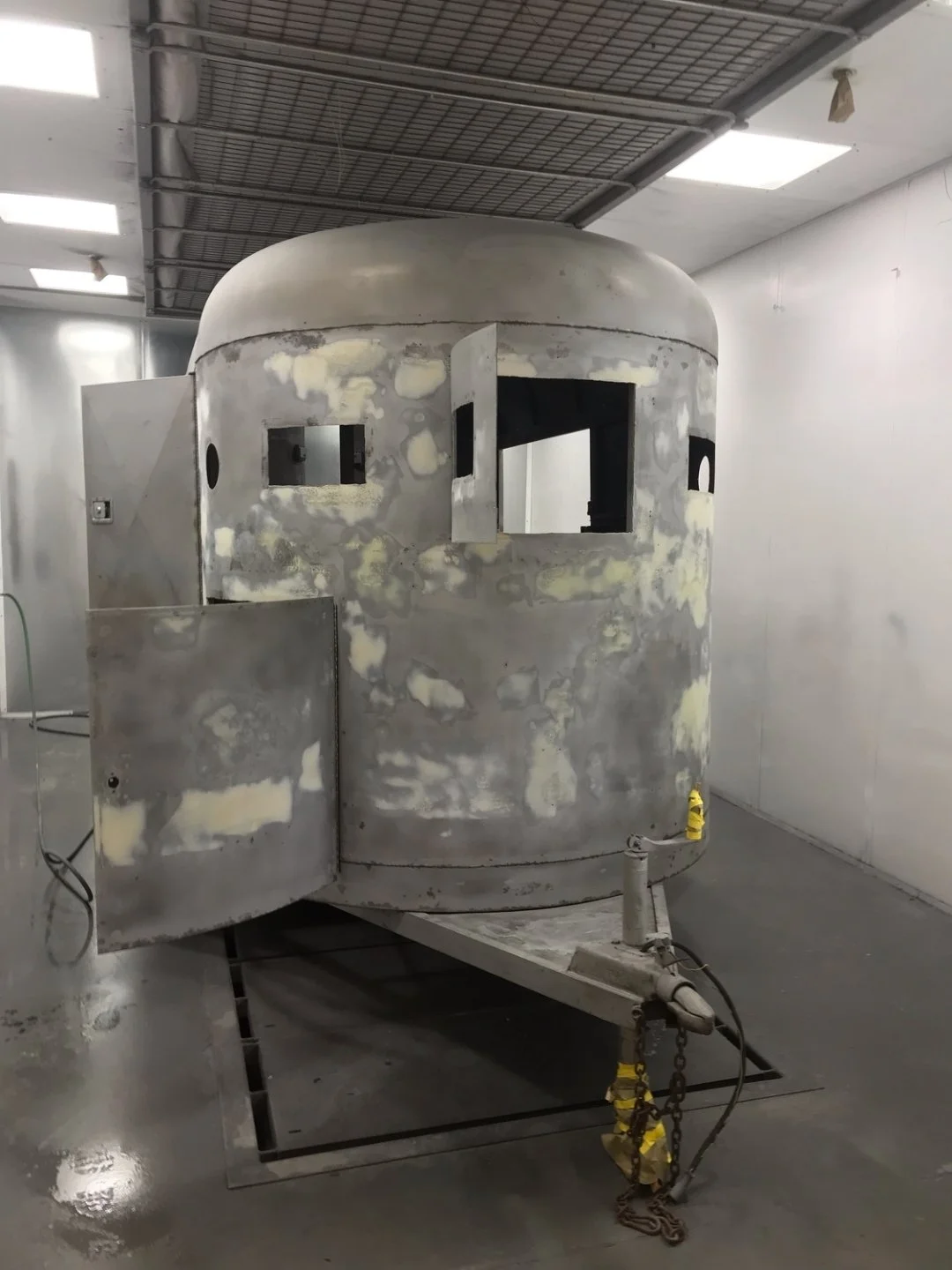
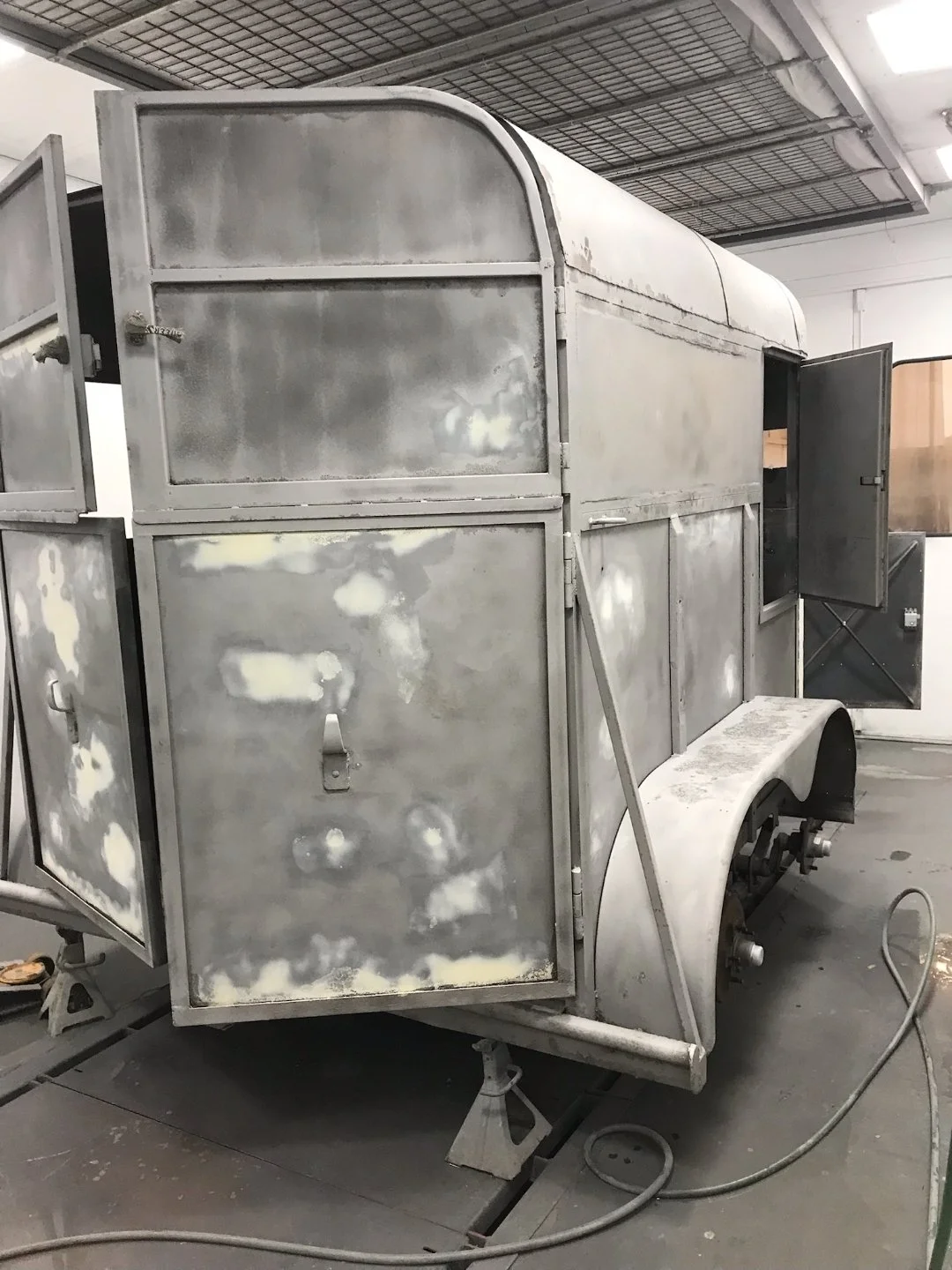
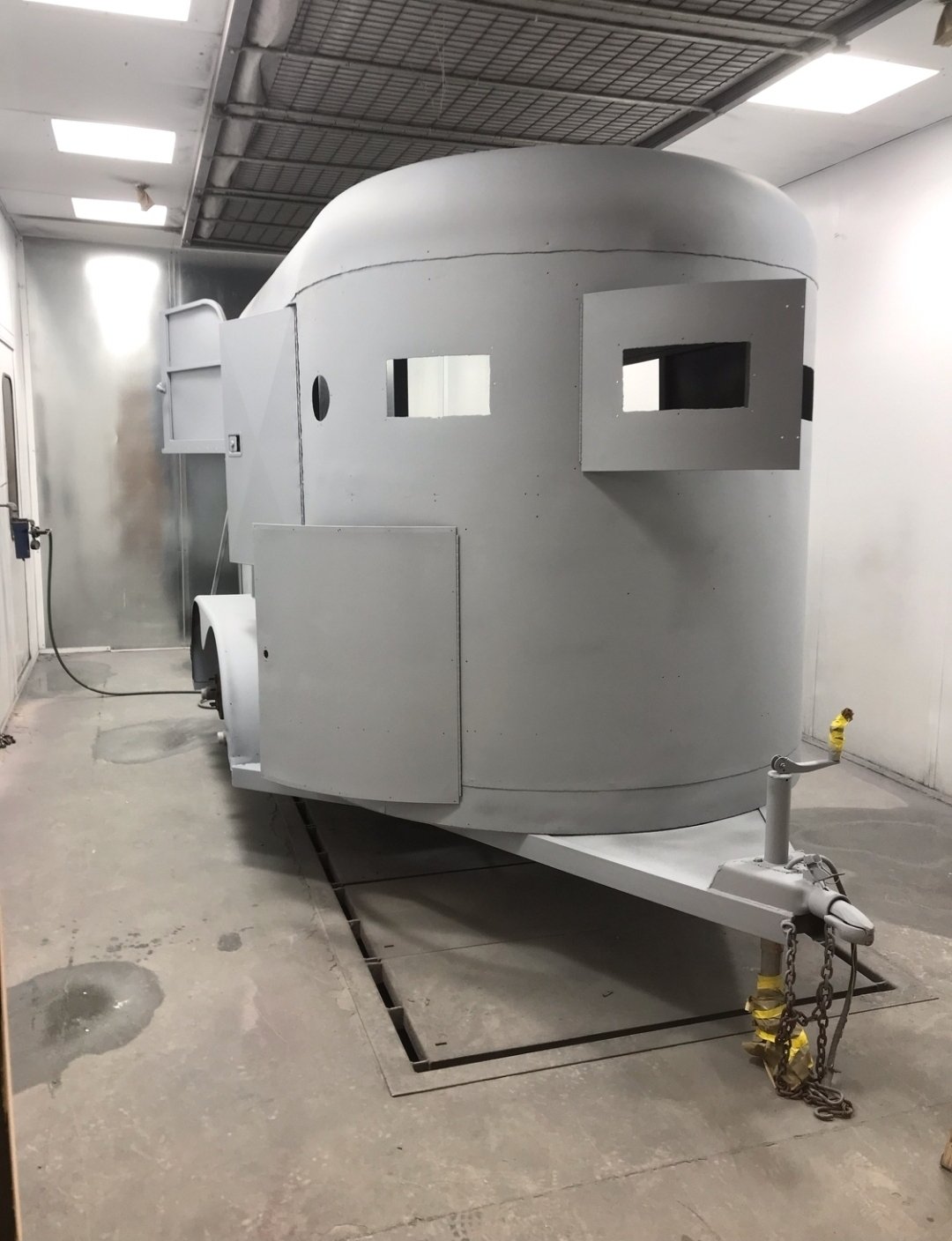
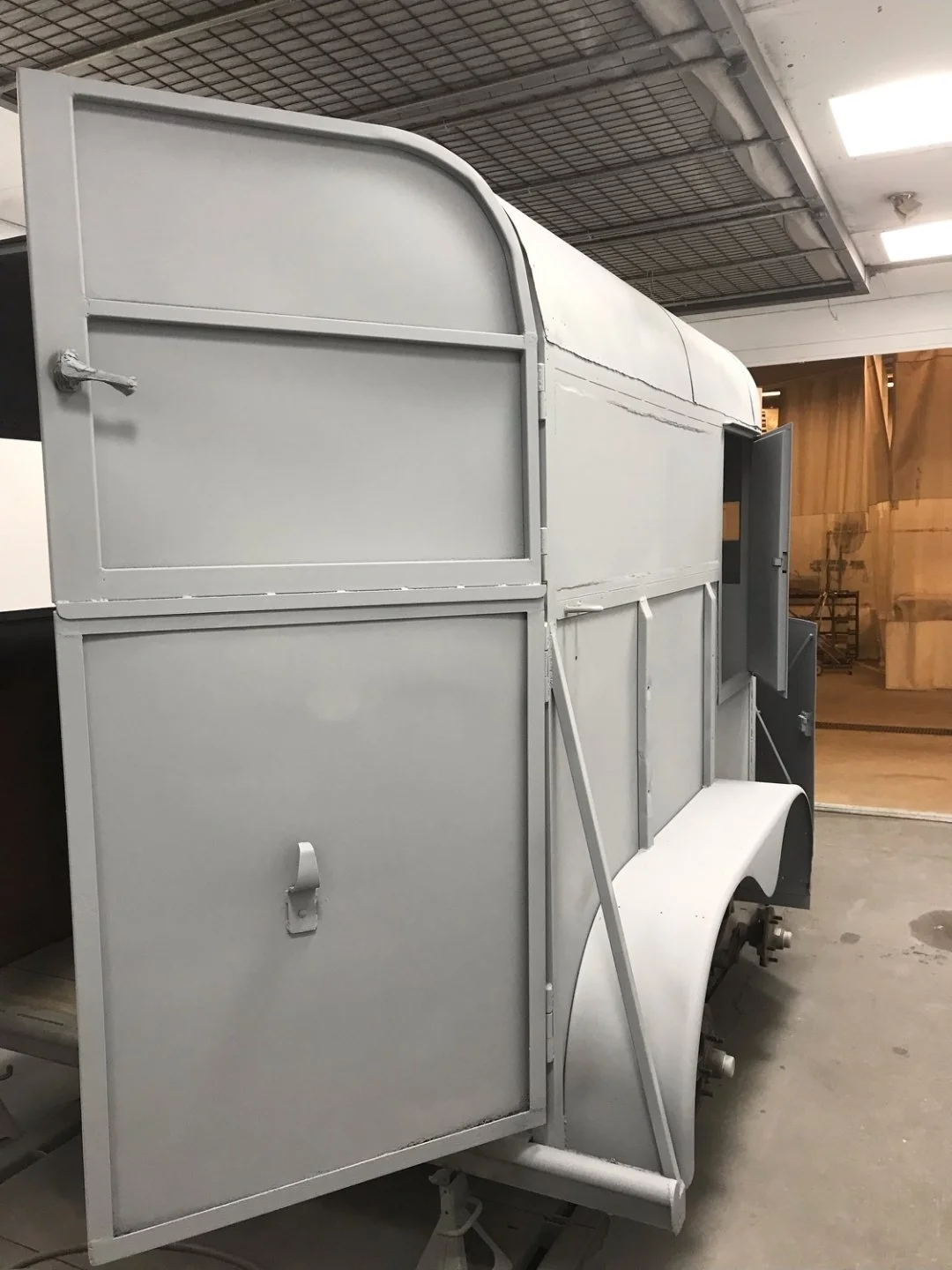
After the welding came primer.
Dad and Kenny worked through the body, welding where necessary, priming the metal and sanding it back down in preparation for what would eventually become one of the most dramatic parts of the transformation.
Paint.
But even that has a story.
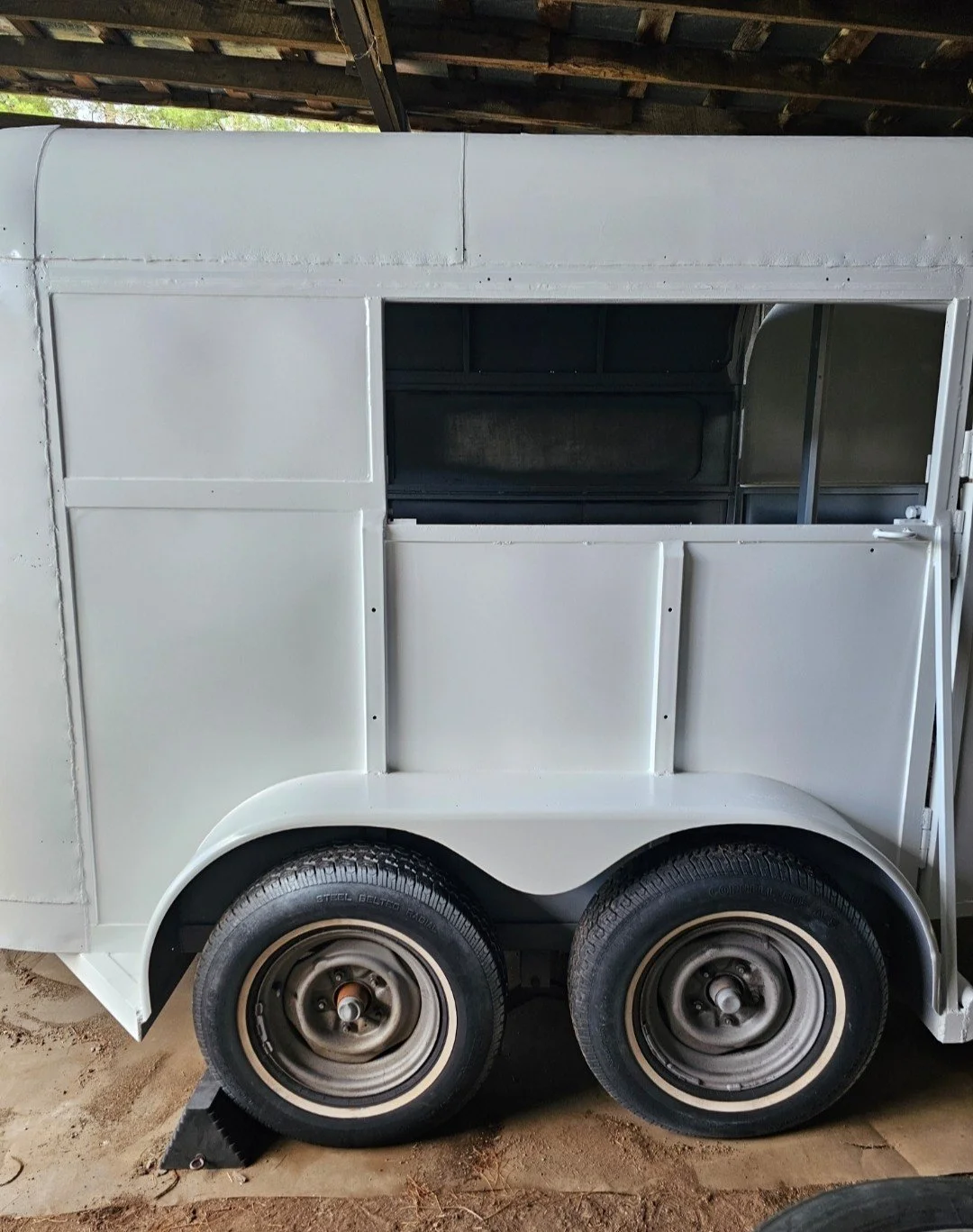
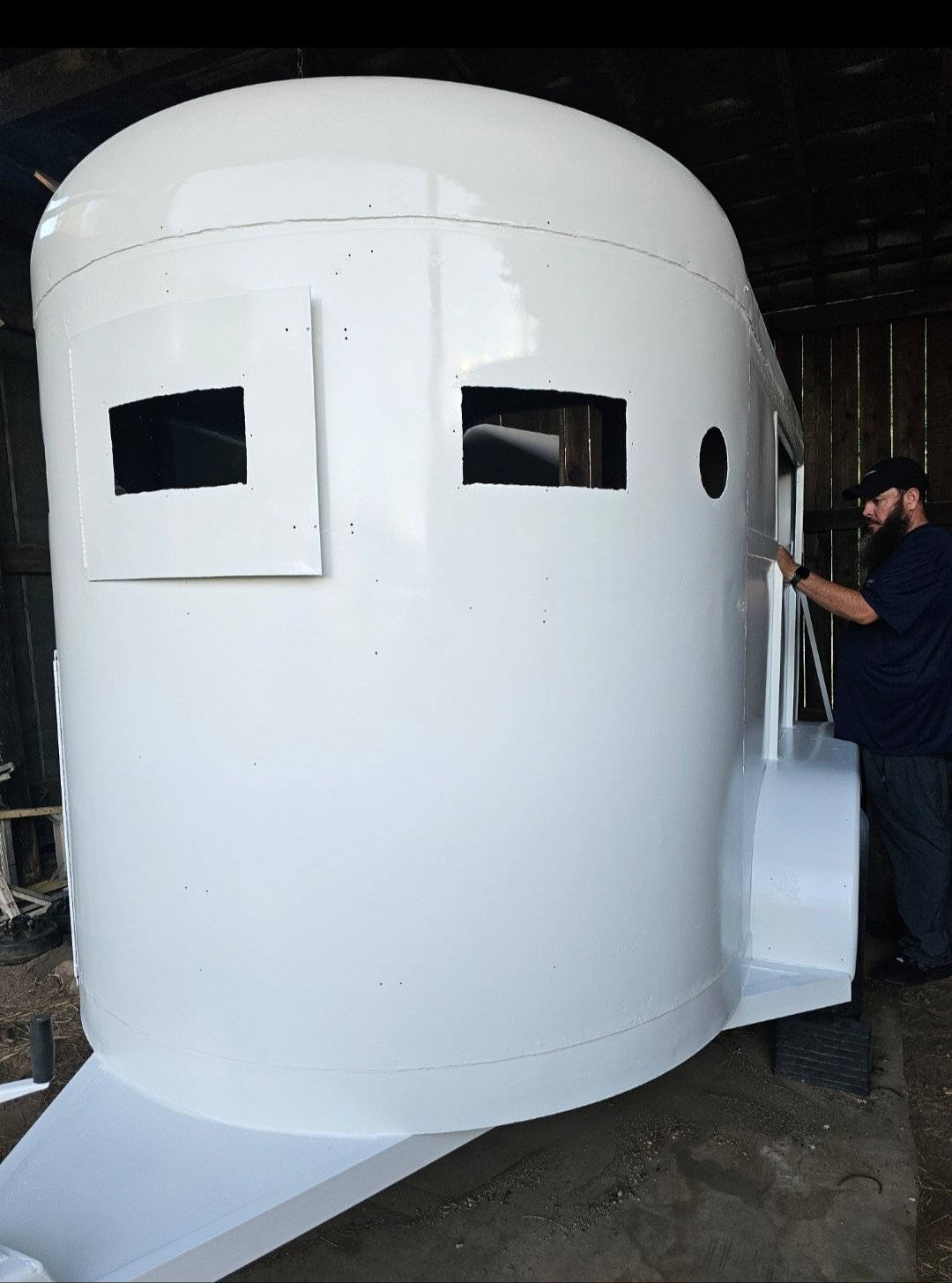
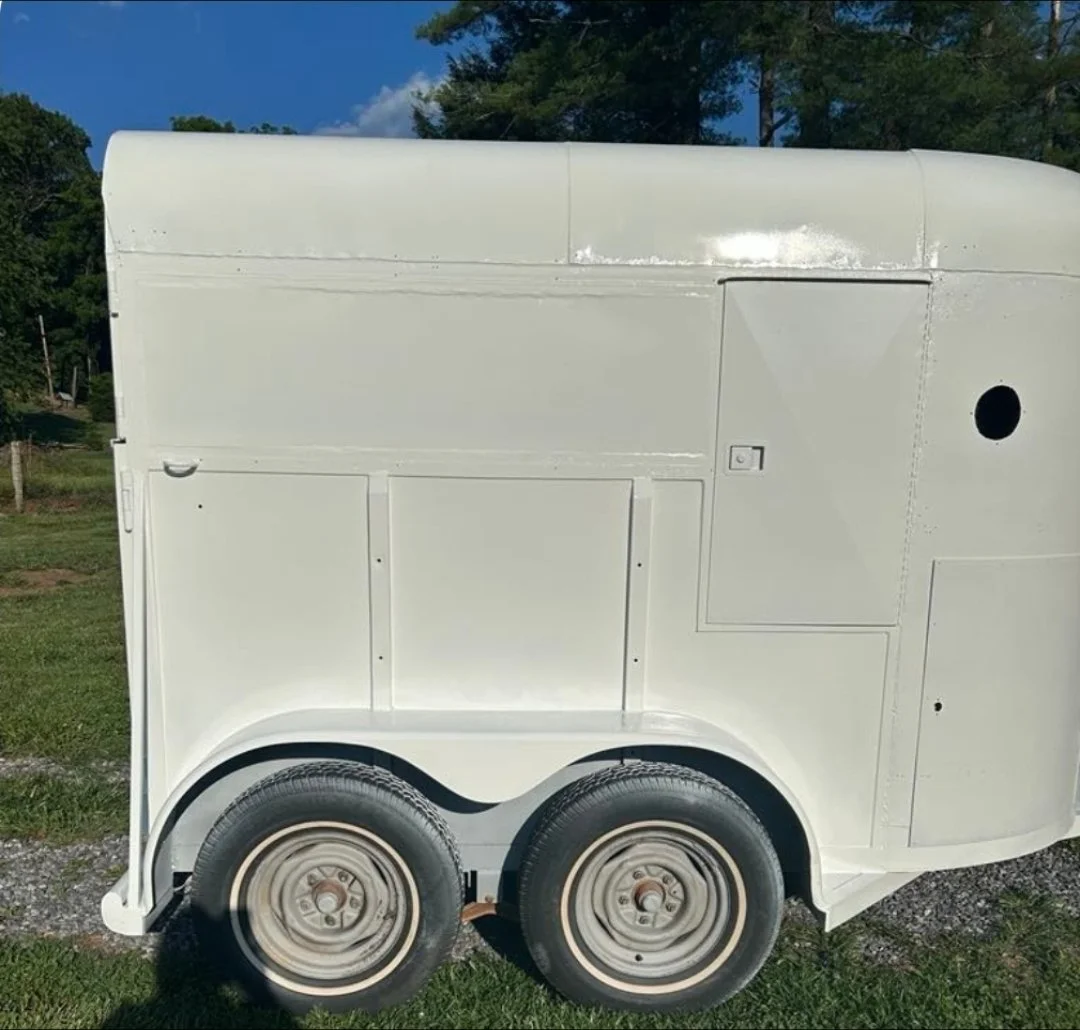
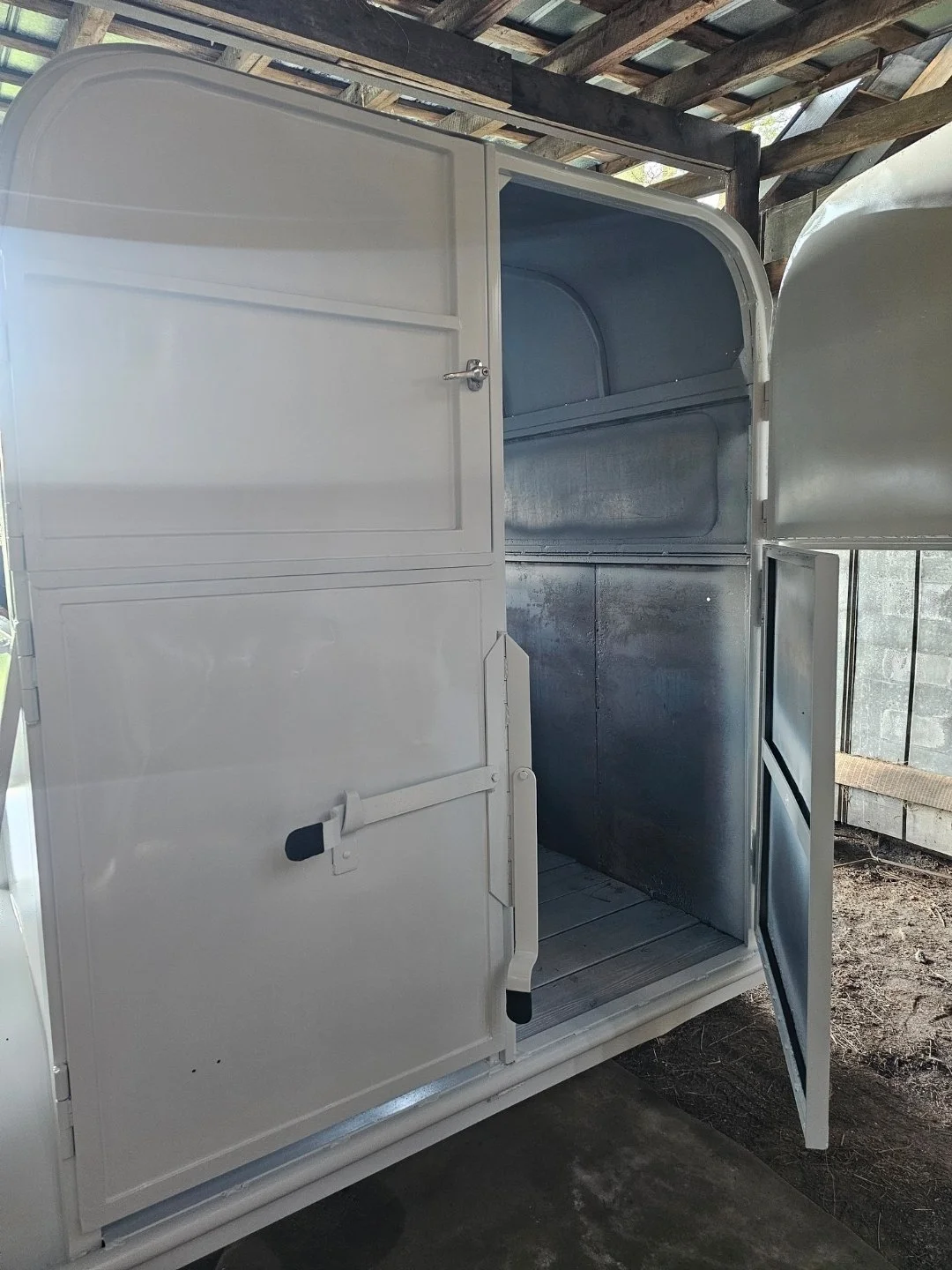
Stage Four: Kenny Brings the Vision to Life
If Dad was responsible for so much of the trailer's bones, Kenny became the man responsible for giving her a completely new skin.
And he didn't just paint the trailer over a weekend.
Kenny spent a semester on it.
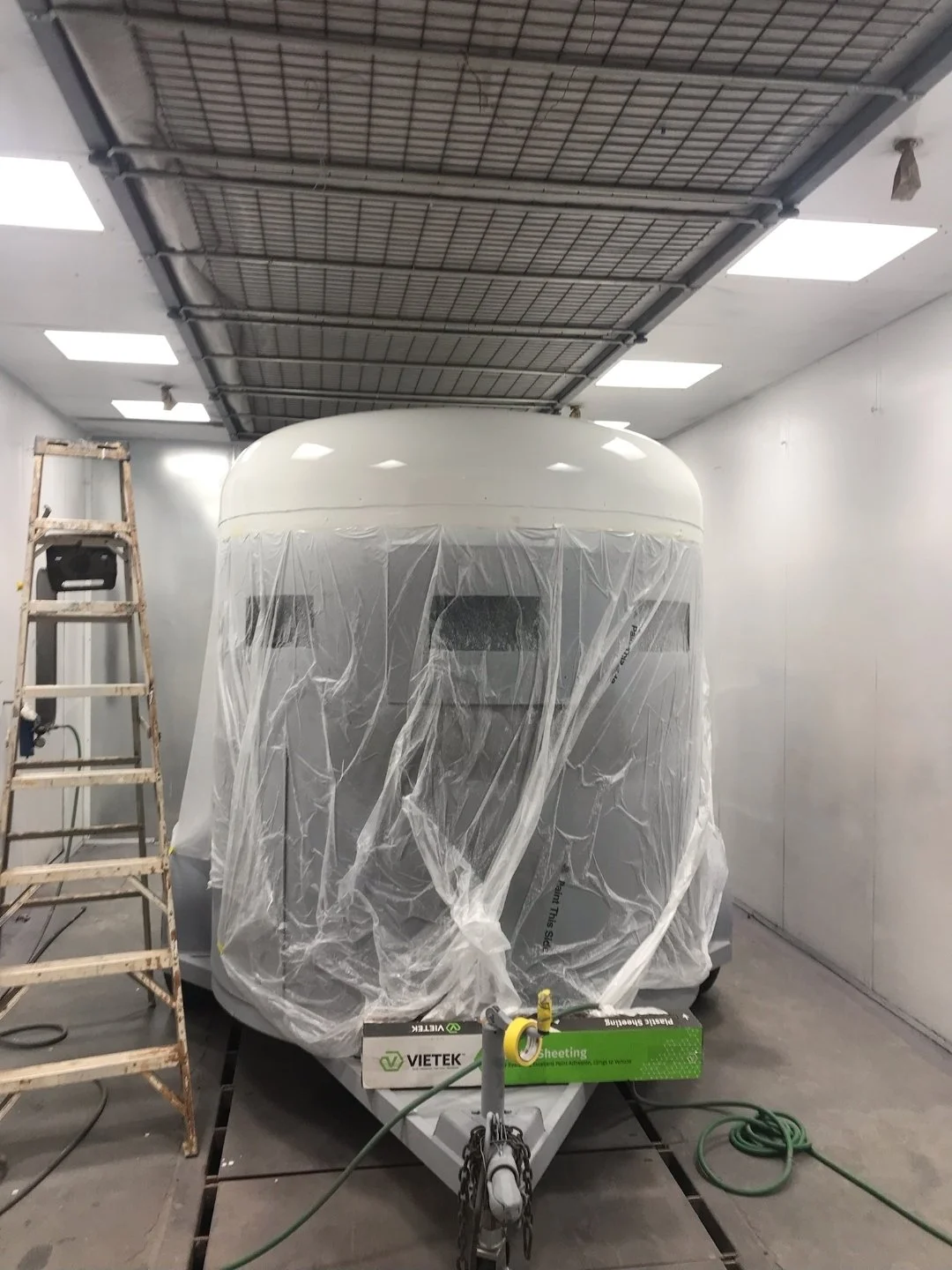
At the time, he was taking a bodywork class at Haywood Community College. That gave him access to something this project desperately needed: a proper paint booth.
So our rusty old horse trailer went to school.
Throughout the semester, Kenny worked on the body and paint from beginning to end.
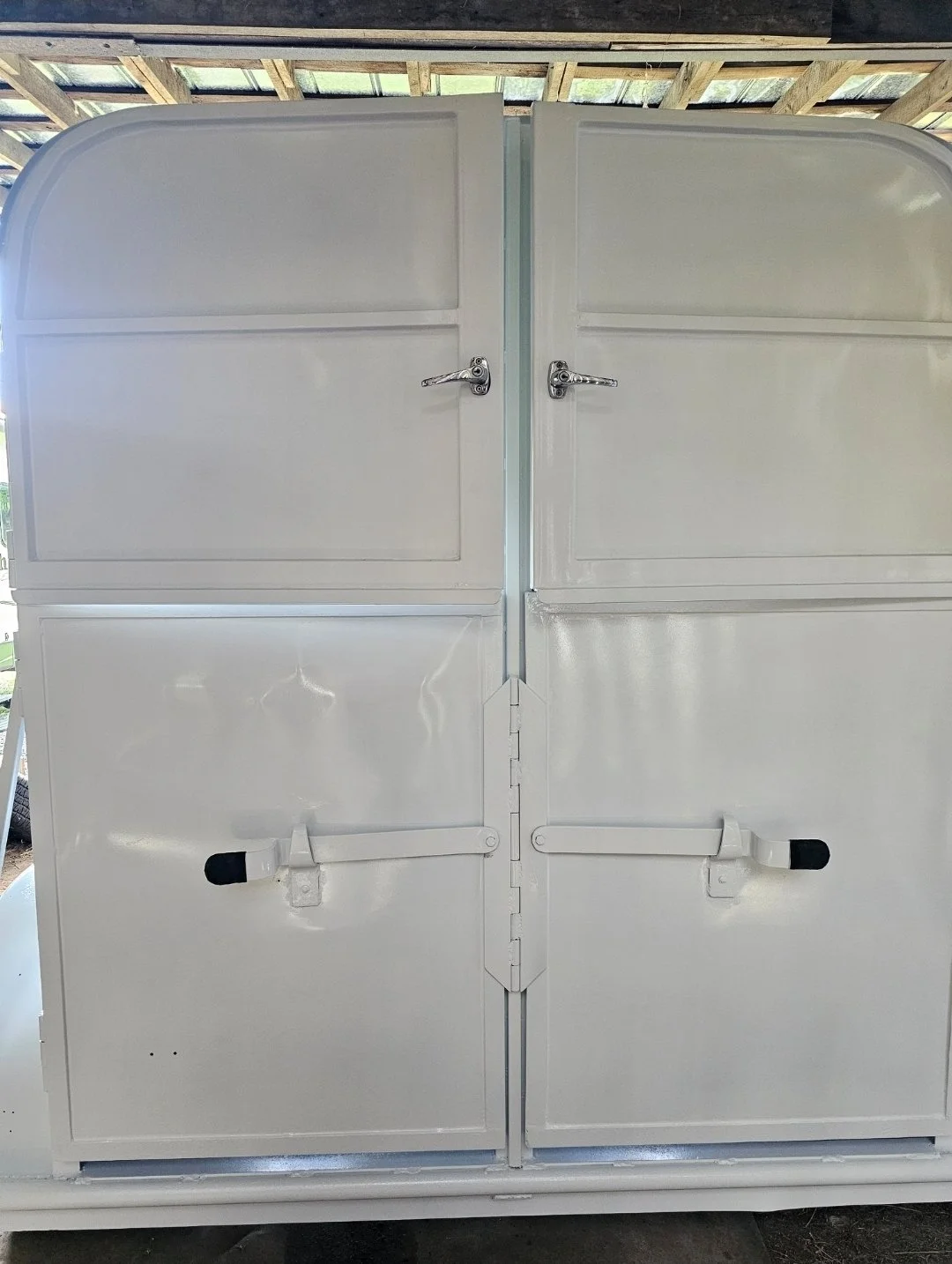
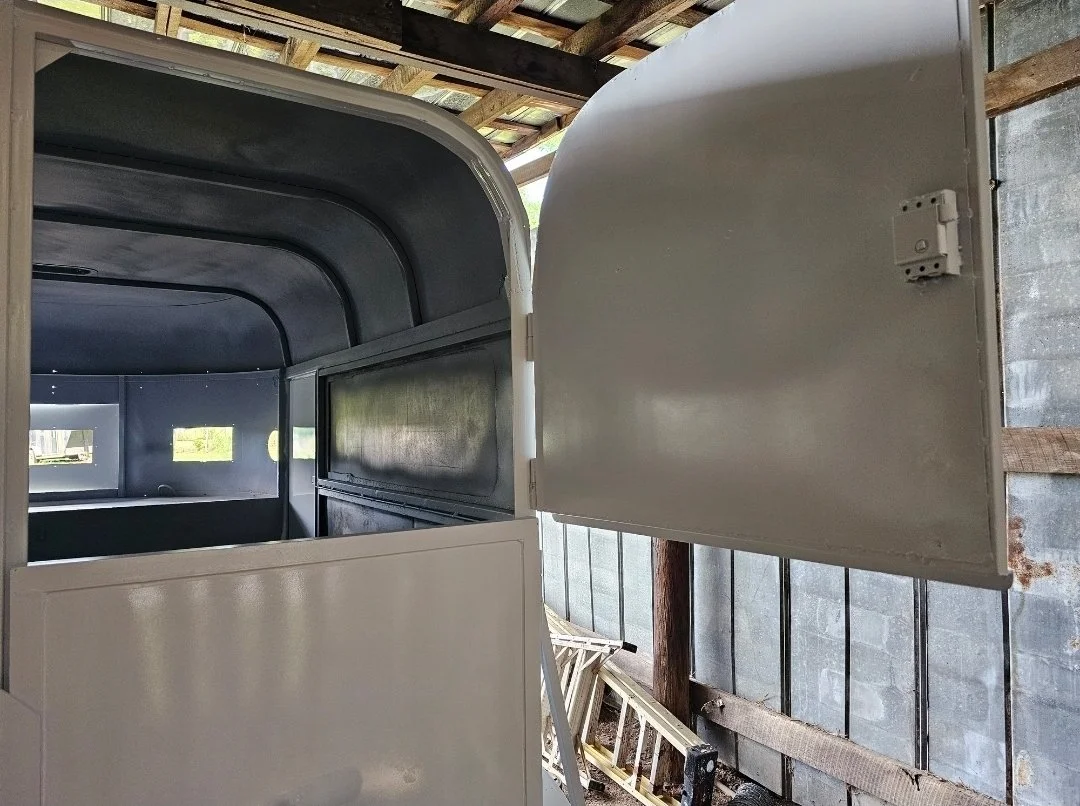
That detail means so much to us now because when you look at the finished trailer, you're not looking at somebody simply spraying paint onto an old utility trailer.
You're looking at hours and hours of preparation and bodywork.
You're looking at someone learning, working and applying his craft to something that mattered deeply to us.
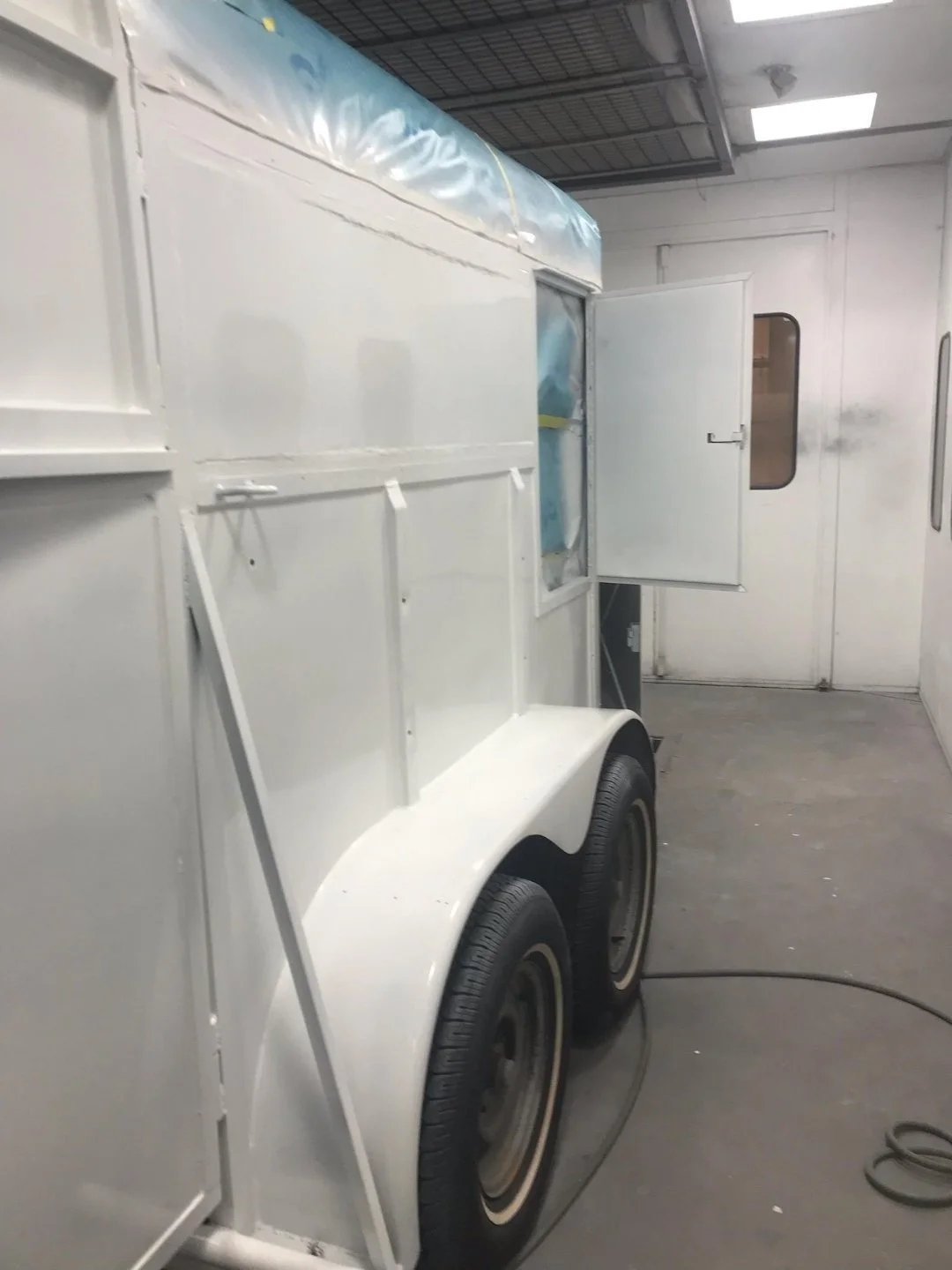
Layer by layer, the old black-and-silver horse trailer disappeared.
The rust was gone.
The repaired metalwork was underneath.
The sanding and grinding had done their job.
And finally, this crazy idea we had been carrying around in our heads started looking like something real.
We could see her.
Not the old horse trailer.
Our trailer.
Stage Five: Building the Inside
A beautiful shell wasn't enough.
This trailer had to work.
That's where Dad went right back to building.
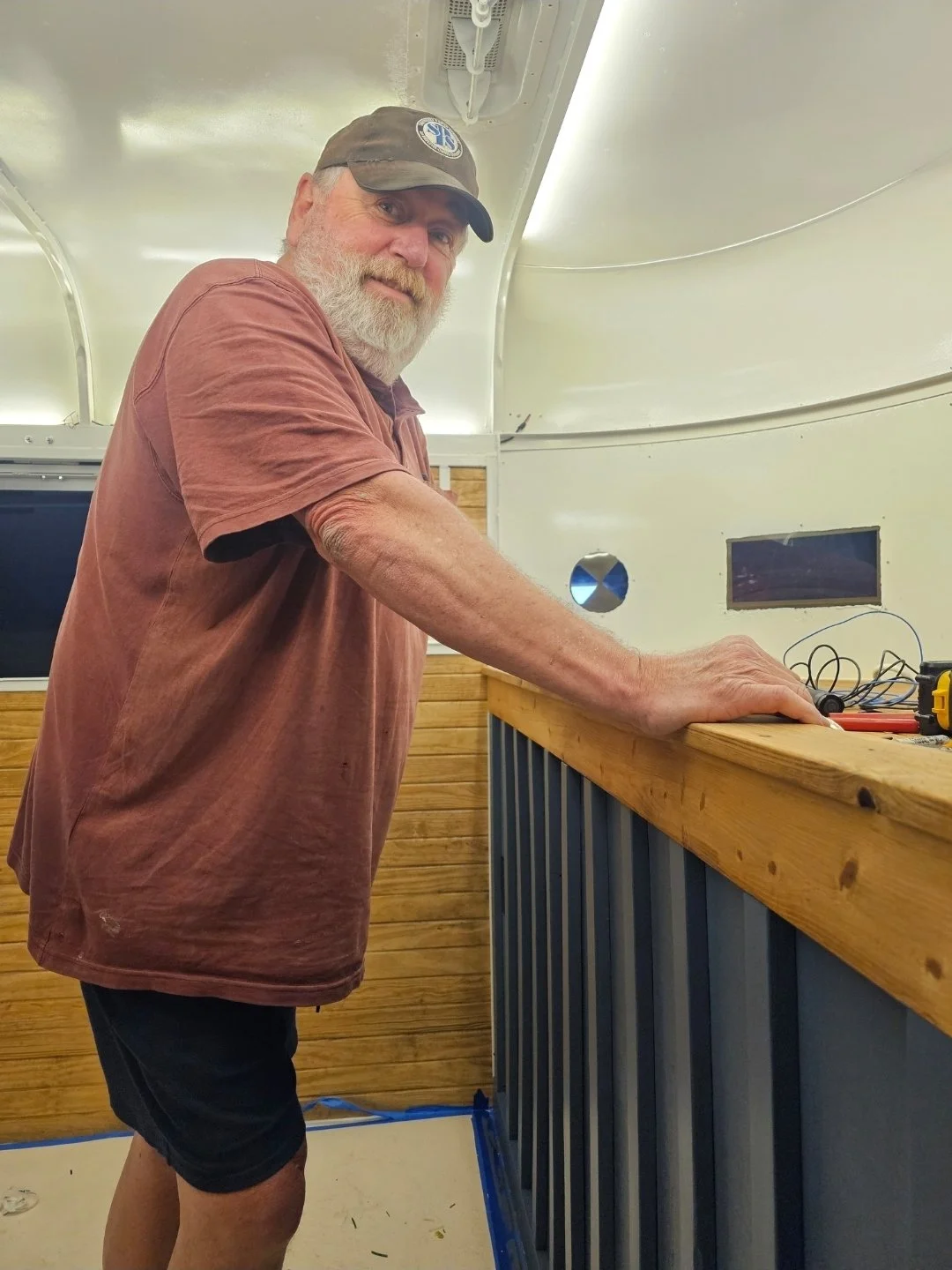
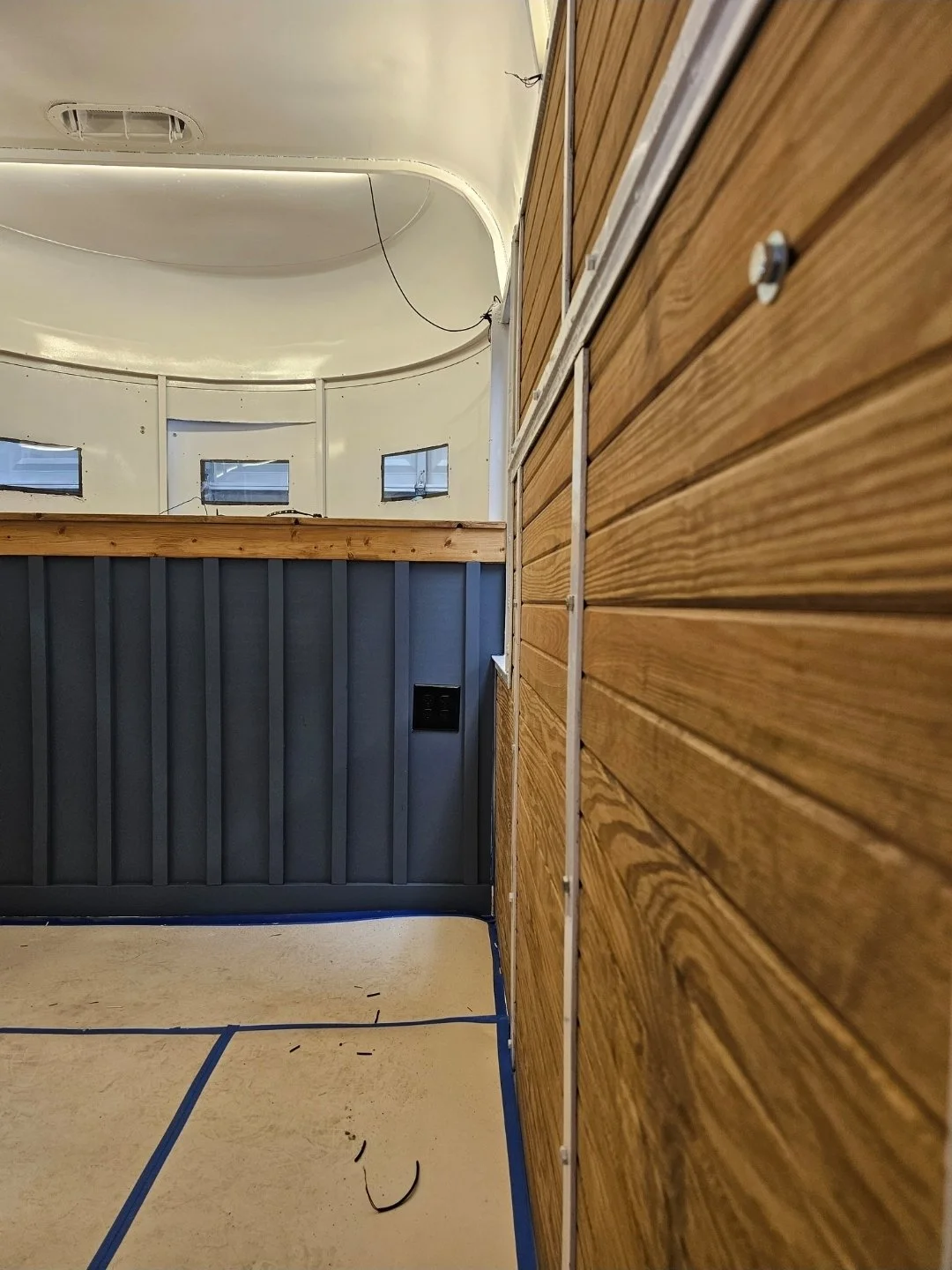
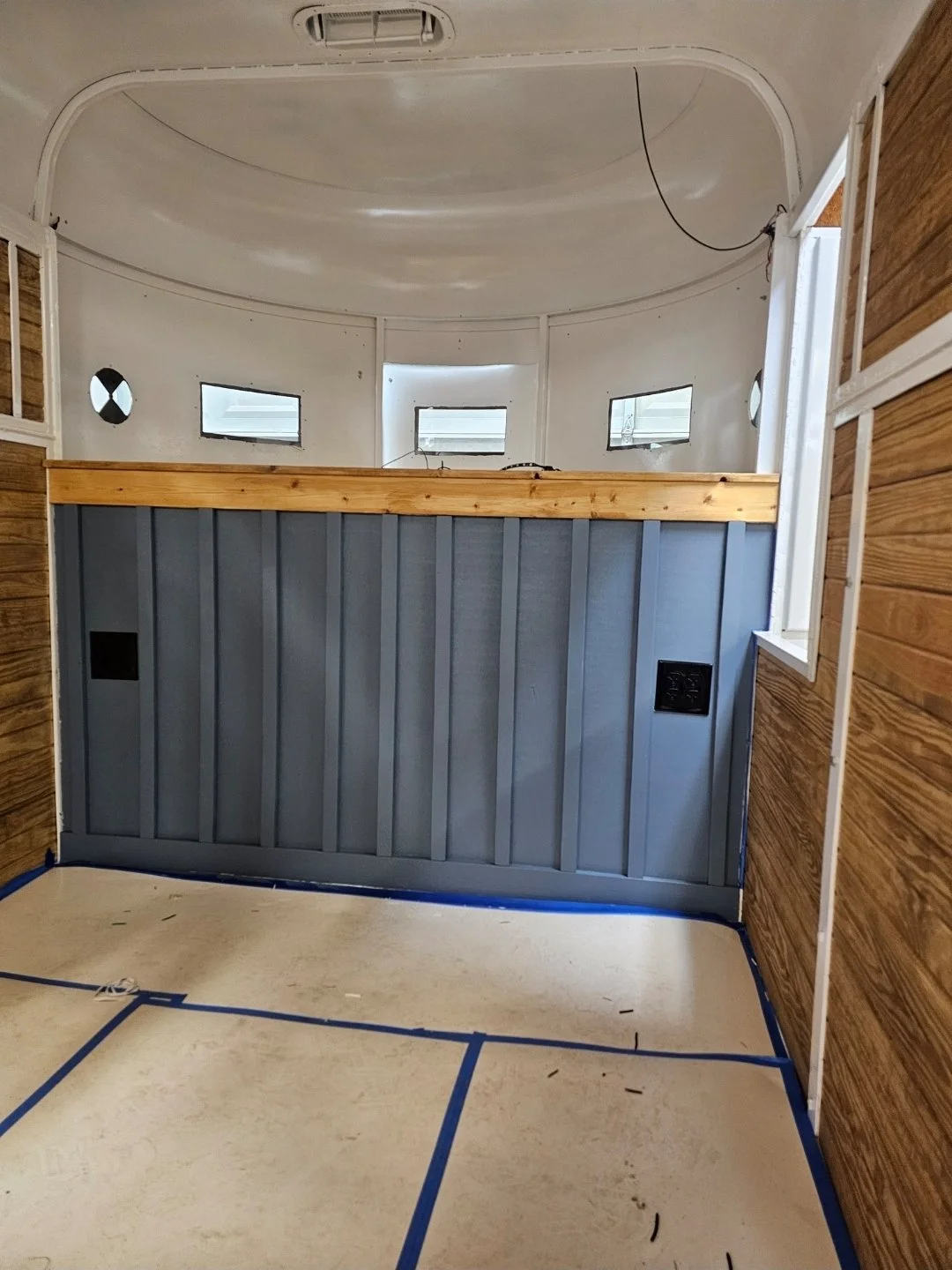
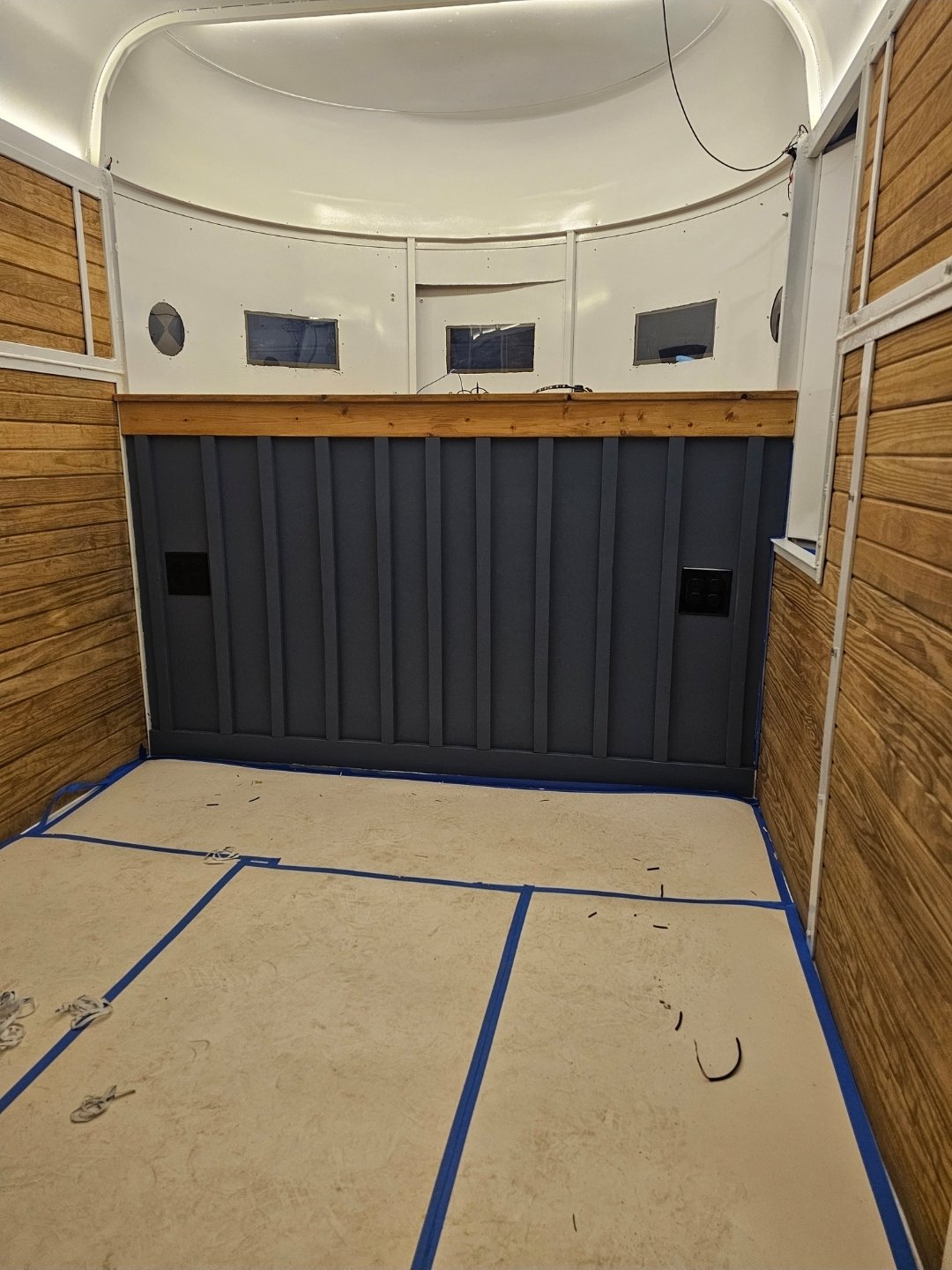
The shelving and storage were his work. The doors and windows were his work. Every piece of wooden fabrication inside the trailer was built by Dad's hands.
One hundred percent of it.
Not ordered.
Not dropped off as a prefabricated kit.
Built.
Dad had to think about the trailer not just as a restoration project, but as a workspace.
Where does something need to sit?
How do we use this space efficiently?
What needs to be accessible?
What needs to be secured when the trailer is moving?
How do you squeeze function into a footprint originally designed for two horses?
Those are the details people don't necessarily notice when they see the finished trailer.
But they're the difference between having a pretty trailer and having a trailer you can actually use.
Dad built it to work.
Stage Six: From a Trailer Floor to a Finished Space
The floor was another transformation.
Dad completed the preparation and finishing work necessary to get it ready, and then two more friends joined the project.
Our friend Kim and his brother, Brian, installed the linoleum flooring.
Suddenly the interior changed again.
Every finished surface moved us another step away from "old horse trailer" and another step toward a clean, functional market space.
That's one of the things we remember most about this project.
There wasn't one giant moment where everything magically became beautiful.
It happened in layers.
Sandblasting.
Welding.
Grinding.
Primer.
Sanding.
Paint.
Flooring.
Woodwork.
Electrical.
Windows.
Doors.
Shelving.
One finished piece revealed what the next unfinished piece needed.
And everybody kept going.
Stage Seven: Let There Be Light
Then came electrical.
Because if we were really going to turn this into a functional market and delivery trailer, it needed more than good looks and shelves.
Once again, Dad was right in the middle of it.
He handled the electrical work with help from our electrician, Dakota.
Like everything else, the electrical system had to be incorporated into a space that had never been intended for this purpose.
That meant thinking ahead about how we'd actually use the trailer once it left the workshop and started working for Easy Peasy Pantry.
It's another part of the finished product that's easy to overlook.
You flip a switch and a light comes on.
Simple.
Except somebody had to figure out how to get the wire there first.
Stage Eight: The Details That Made Her Ours
Eventually, we reached a wonderful stage in the restoration.
We weren't trying to make an old trailer functional anymore.
It was functional.
Now we got to give her an identity.
And that's when another group of incredibly talented people entered the story.
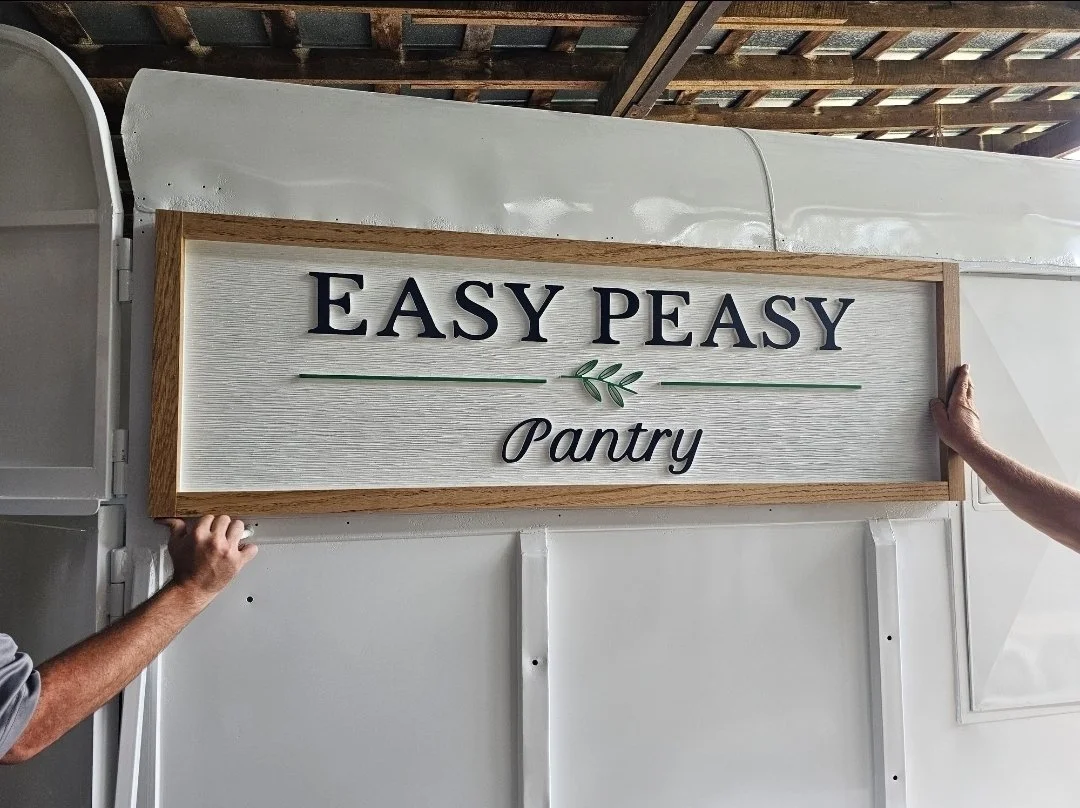
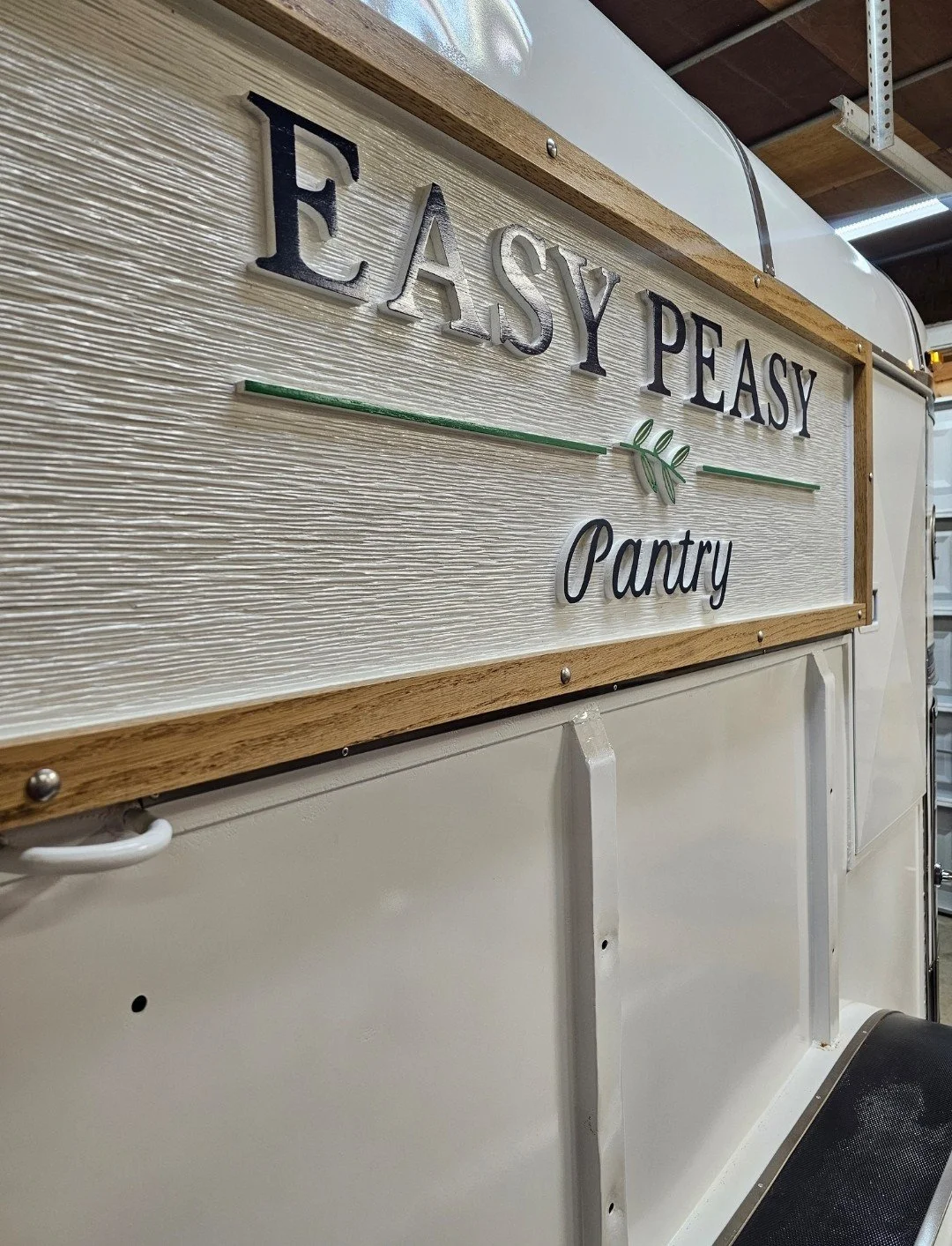
The beautiful wooden signage was created by the amazingly talented Ron Perusi of Perusi Wood Carving. Visit Perusi Wood Carving
His craftsmanship added something that couldn't have come from a mass-produced sign. Wood brought warmth and character to all that freshly restored metal and helped make the trailer feel like Easy Peasy Pantry.
Then came the vinyl.
Our vinyl signage was created and installed by the incredibly talented Sharon Webb and her son, Tanan Webb, at Flying Pig Signs & Apparel. Visit Flying Pig Signs & Apparel
And that was one of those finishing touches that changed everything.
Because once the Easy Peasy Pantry name went onto the side, there was no mistaking what this old trailer had become.
She had an identity.
She belonged to the business.
She belonged to the story.
She was ours.
But Here's What We Really See
Today, somebody can look at our trailer and see a cute restored vintage horse trailer.
We don't.
Or at least, that's not all we see.
We see Dad covered in dust from sanding and grinding.
We see Kenny working through a semester of bodywork and paint.
We see Chad beside Dad figuring out the metalwork.
We see a center horse partition being cut apart and somehow becoming a service window and countertop.
We see Kim and Brian laying flooring.
We see Dakota helping Dad work through the electrical.
We see Ron's woodworking.
We see Sharon and Tanan applying the signage that finally put our name on the side.
We see friends.
We see family.
We see hours.
We see favors.
We see skills people spent years learning being offered to help two people trying to build a little food business.
And that's why this trailer could never be replaced by simply buying a new one.
A new trailer might be perfect.
This one has a story.
Three Men and One Crazy Idea
There are a lot of people whose talents are represented in the finished trailer, and we're incredibly grateful for every one of them.
But when we think about the actual transformation, we always come back to three men.
Dad. Kenny. Chad.
My dad.
My second dad.
And my husband.
They were the masterminds behind taking this crazy idea and figuring out how to physically build it.
Dad became the fabricator, carpenter, electrician, grinder, installer, problem-solver and general answer to the question, "How in the world are we going to do this?"
Kenny welded alongside him and then spent an entire semester transforming the body and paint.
Chad worked shoulder-to-shoulder with Dad on the metalwork and helped turn the idea we had for our business into something we could actually hitch to a vehicle and take down the road.
They didn't just talk about what the trailer could become.
They built it.
And there is something about that that gets more meaningful to us as the years go by.
When you're trying to start a small business, you don't have everything figured out.
You don't have unlimited money.
You don't have unlimited resources.
Half the time, you're learning what you need five minutes before you need it.
But sometimes you have something much more valuable.
You have people who believe in you.
Good Bones
Looking back, maybe that old trailer was the perfect thing for Easy Peasy Pantry.
Because she and this business have more in common than we realized.
Neither started out polished.
Both required a ridiculous amount of work.
Both were built one stage at a time.
And neither would be what it is today without people willing to roll up their sleeves and help.
That old horse trailer wasn't worthless because she was rusty.
Underneath it all, she had good bones.
She just needed someone willing to see what she could become.
And maybe that's what family does for us, too.
They see beyond where you are.
They see what you're trying to build.
And sometimes, instead of simply telling you they believe in your dream, they pick up a welder, a grinder, a paint gun, a saw or a screwdriver...
and help you build it.
From Two Horses to Easy Peasy Pantry
It's almost funny to think about now.
This trailer started life with a divider running through the middle so it could haul two horses.
That divider is now part of the service window and countertop of an Easy Peasy Pantry market trailer.
The black-and-silver exterior covered in rust was sandblasted away.
Dad, Kenny and Chad rebuilt and reshaped it.
Kenny gave it new life through bodywork and paint.
Dad built its wooden interior by hand.
Friends helped with flooring and electrical.
Local craftspeople put their talents into the finishing details.
And somewhere along the way, an old horse trailer stopped being an old horse trailer.
She became part of our family.
Part of our business.
And part of the story of Easy Peasy Pantry.
We don't know how many miles are ahead of her.
But we know exactly where she came from.
And every time we look at her, we're reminded that some of the most beautiful things we've built didn't begin with much more than an idea, a whole lot of work...
and good bones.
To Dad, Kenny, Chad, Kim, Brian, Dakota, Ron, Sharon and Tanan:
Thank you.
There is a piece of every one of you riding down the road with us.
And Dad—
Every piece of wood, every shelf, every door, every window, every weld, every ounce of epoxy, and every handmade detail reminds us of just how much of yourself you poured into helping us build this dream.
We could have bought a trailer.
But it never could have meant what this one means.
This one was built with us.
And Finally, to My Dad
Dad,
I don't know if I'll ever be able to fully explain what this trailer means to me, because when I look at it, I don't just see Easy Peasy Pantry.
I see you.
I see your hands in every piece of wood you cut, every weld you ground smooth, every shelf you built, every door and window you fitted, and every little detail you figured out when the rest of us were still trying to imagine how it was all going to come together.
You took an old, rusty horse trailer that most people probably wouldn't have looked at twice and saw what it could become. Then you gave your time, your talent, your patience, and countless hours of hard work to make that vision real.
But what means the most to me isn't the trailer itself.
It's knowing that when Chad and I had this crazy dream of building Easy Peasy Pantry, you never stood on the sidelines and watched us chase it.
You got your hands dirty and chased it with us.
You built something for our business with the same hands that have spent my whole life building, fixing, helping, and showing up whenever I needed you.
There isn't a price you can put on that.
Someday the paint may show a few miles. The floors may carry the marks of a thousand markets. The wood may tell its own stories of all the places we've been. But I hope it does, because every one of those marks will mean that something you helped us build kept going.
No matter where Easy Peasy Pantry takes us, this trailer will always remind me where we came from—and of a dad who believed enough in his daughter's dream to help build it with his own two hands.
I hope every time you see her rolling down the road, you know how proud I am to say:
My dad built that.
Thank you for believing in us.
Thank you for showing up.
Thank you for every hour nobody saw.
Thank you for putting so much of yourself into something that mattered so much to us.
And most of all, thank you for being the kind of dad who has always taught me that if something has good bones, a little imagination, and people willing to work hard for it...
there's no telling what it can become.
I love you, Dad. This trailer will always be one of my favorite pieces of our story because so much of you is built into it.