
Browned Butter: The Simple Ingredient That Changes Everything
Some of the best things that happen in the kitchen start with the simplest ingredients.
Butter is certainly one of them.
We use butter for everything from cakes and cookies to buttercream, sauces and mashed potatoes. But give that same butter a few extra minutes on the stove, and something pretty incredible happens.
It becomes browned butter—rich, nutty, toasted and almost caramel-like, with a depth of flavor that ordinary melted butter simply doesn't have.
At Easy Peasy Pantry, we love techniques like this because they represent exactly what good cooking is about. You don't always need another ingredient or a complicated recipe to make something better.
Sometimes you just need to know what to do with the ingredients you already have.
And browned butter is one of our favorite examples.
With a pastry-chef background behind many of the recipes coming out of the Easy Peasy Pantry kitchen, we've seen firsthand just how versatile browned butter can be—especially when it comes to desserts.
Chocolate chip cookies, buttercream, cakes, blondies, fruit crumbles, shortbread and even something as simple as a Rice Krispie treat can become completely different when browned butter enters the picture.
But before we start dreaming about dessert, let's talk about what browned butter actually is.
What Is Browned Butter?
Butter is made primarily of butterfat, water and milk solids.
When butter is heated, it first melts. As it continues cooking, the water begins to evaporate and the milk solids separate.
Keep going, and those milk solids begin to toast.
That's when things get interesting.
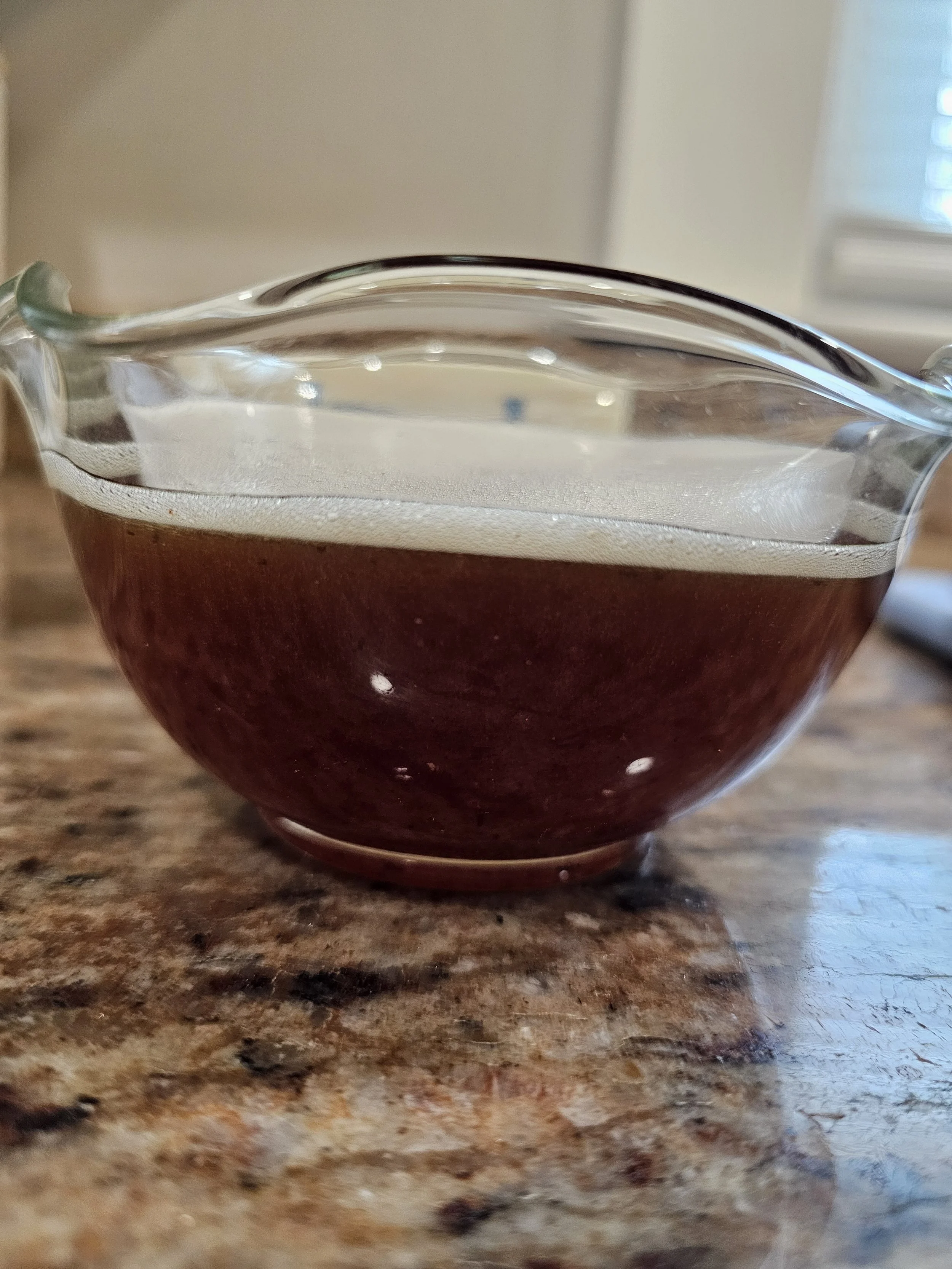
The little specks at the bottom of the pan slowly change from pale yellow to golden brown while the butter develops a wonderfully nutty, toasted aroma.
In classical French cooking, browned butter is called beurre noisette, which translates to “hazelnut butter.” There aren't actually any hazelnuts involved—the name comes from the beautiful hazelnut-like color and nutty aroma that develop as the butter browns.
What started as an ordinary stick of butter has suddenly become an ingredient with layers of flavor.
And it only took a few minutes.
How to Brown Butter
Browning butter isn't difficult.
But it does require your attention.
Start with butter.
Salted or unsalted butter can both be browned, although we generally prefer unsalted butter when baking because it allows better control over the salt in the finished recipe.
Cut the butter into evenly sized pieces so it melts consistently.
Use a light-colored pan.
A stainless steel or other light-colored saucepan is ideal.
Can you brown butter in a dark skillet?
Absolutely.
But you're making the job harder than it needs to be.
Being able to see the color of the milk solids is one of the easiest ways to know when your butter is ready.
Melt the butter over medium heat.
The butter will melt and eventually begin to foam and bubble as its water content evaporates.
Gently stir or swirl the pan occasionally.
Then start paying attention.
As the foaming changes, you'll begin seeing tiny specks forming along the bottom of the pan.
Those are the milk solids.
They'll begin turning golden and eventually develop a deeper brown color.
At the same time, you'll notice the aroma change.
It stops smelling like ordinary melted butter and starts smelling wonderfully toasted and nutty.
That's what we're looking for.
Get it out of the hot pan.
Once those milk solids are beautifully browned, remove the butter from the heat and immediately transfer it to a heat-safe container.
And whatever you do:
Don't leave those little brown bits behind.
That's where so much of the flavor lives.
Browned Butter vs. Burned Butter
Here's the catch.
The difference between browned butter and burned butter can be a matter of seconds.
Once those milk solids begin changing color, don't walk away from the stove.
Properly browned butter should smell nutty, toasted and rich. The milk solids should be golden brown to deep brown.
If those specks turn black and the butter begins smelling bitter or burned, it's gone too far.
Unfortunately, there's no great kitchen trick for rescuing burned butter.
Start over.
A stick of butter is a lot cheaper than ruining an entire batch of cookies.
Also remember that the pan remains hot even after you've turned off the burner. That's why we recommend transferring the butter to another container rather than simply removing the pan from the heat.
After you've browned butter a few times, you'll begin recognizing that unmistakable aroma almost as quickly as you recognize the color.
Why Does Browned Butter Taste So Good?
There's some pretty interesting food science happening inside that saucepan.
As the milk solids toast, they undergo what's known as the Maillard reaction.
It's the same type of browning responsible for some of the flavors we love in toasted bread, roasted coffee and the beautifully browned exterior of a steak.
With butter, the process creates nutty, toasted and caramel-like flavors.
That's why browned butter can make such a dramatic difference in a recipe without adding a single additional ingredient.
And this is where the pastry kitchen gets really interesting.
Our Favorite Ways to Use Browned Butter in Desserts
Browned butter and pastry were made for each other.
Butter is already such an important component of baking that changing the character of the butter can change the entire dessert.
If you're new to browned butter, here are some of our favorite places to start.
Browned Butter Chocolate Chip Cookies
This should probably be everyone's introduction to baking with browned butter.
A great chocolate chip cookie already has some of browned butter's best friends: brown sugar, vanilla, chocolate and salt.
Browning the butter introduces another layer of toasted, nutty flavor that makes all of those ingredients taste even better.
Try browned butter chocolate chip cookies with dark chocolate chunks and flaky sea salt.
Or add toasted pecans.
Or toffee pieces.
Or espresso.
Or all of the above if you're feeling dangerous.
There's one important thing to remember when adapting an existing cookie recipe: browning butter removes some of its water.
That changes the composition of the butter, which can affect the moisture and spread of your cookies. A recipe specifically developed for browned butter will account for this.
That's one of the differences between simply swapping ingredients and understanding what those ingredients are actually doing in a recipe.
Browned Butter Buttercream
This is where a pastry-chef trick can completely change a familiar cake.
Buttercream gets a huge portion of its flavor from—you guessed it—butter.
So what happens when we change the flavor of that butter?
Instead of a buttercream that's simply sweet, creamy and buttery, browned butter gives it a deeper toasted flavor.
The trick is allowing the browned butter to cool back to the proper consistency before incorporating it into the buttercream.
It works beautifully with American-style buttercream, but we're especially fond of what browned butter can bring to Swiss meringue buttercream.
That light, silky buttercream combined with the deep flavor of browned butter is something special.
Try browned butter buttercream on:
Vanilla bean cake, chocolate cake, spice cake, carrot cake, banana cake, pumpkin cake, apple cake, maple cake or pecan cake.
Pair it with caramel and now you're really onto something.
Browned Butter Fruit Crumbles and Crisps
Fruit crumbles are another perfect place to experiment.
Think about everything already happening in a good crumble topping:
Butter.
Brown sugar.
Flour.
Oats.
Spices.
Maybe some pecans.
Now imagine replacing ordinary melted butter with browned butter.
Try a Browned Butter Apple Crisp with Toasted Pecans, especially when fall rolls around.
Or experiment with:
Peach & Browned Butter Crumble
Blackberry Browned Butter Crisp
Pear & Cinnamon Browned Butter Crumble
Blueberry-Lemon Browned Butter Crisp
One simple change gives an otherwise familiar dessert much more depth.
Browned Butter Cakes
Browned butter works especially well in cakes where butter is already an important flavor component.
A Browned Butter Vanilla Bean Pound Cake is a great example.
Pound cake doesn't have dozens of ingredients hiding behind one another, so the flavor of the butter actually matters.
But don't stop there.
Try:
Browned Butter Pecan Cake
Browned Butter Apple Cake
Browned Butter Banana Cake
Browned Butter Maple Cake
Browned Butter Pumpkin Cake
Browned Butter Carrot Cake
There's a pattern here.
Ingredients with warm, caramelized, earthy or toasted flavors naturally pair beautifully with browned butter.
Think brown sugar, vanilla, maple syrup, pecans, walnuts, cinnamon, apples, pears, bananas, pumpkin, coffee, caramel and chocolate.
Those combinations give you an enormous playground for developing desserts.
Browned Butter Blondies
If chocolate chip cookies are your introduction to browned butter, blondies should probably be your second stop.
Brown sugar and browned butter together create an incredibly rich, almost butterscotch-like flavor.
Add dark chocolate.
Or toasted pecans.
Or white chocolate.
Or salted caramel.
A Browned Butter Pecan Blondie finished with flaky sea salt doesn't need much else.
Sometimes knowing when to stop adding ingredients is just as important as knowing what to add.
Browned Butter Brownies
Chocolate is obviously the star of a brownie, but that doesn't mean the butter can't contribute something.
Browned butter brings subtle toasted notes that complement chocolate particularly well.
Try pairing it with espresso to intensify the chocolate flavor.
Browned Butter Espresso Brownies topped with a little sea salt?
Yes, please.
Browned Butter Cheesecake
Here's an easy way to introduce browned butter without changing the cheesecake filling at all.
Put it in the crust.
Instead of combining graham cracker crumbs with ordinary melted butter, use browned butter.
That toasted flavor becomes the foundation for the entire dessert.
Take it a little further with a Browned Butter Cheesecake with Salted Caramel and a Pecan-Graham Cracker Crust.
That's the kind of dessert people remember.
Browned Butter Rice Krispie Treats
Sometimes the simplest ideas are the best ones.
Brown the butter before adding your marshmallows.
That's it.
Suddenly the Rice Krispie treat you remember from childhood has a deep, toasted flavor that makes it taste surprisingly grown-up.
Finish the top with a little flaky sea salt.
Just don't expect the pan to last long.
Browned Butter Cinnamon Rolls
Browned butter has several opportunities to sneak into a cinnamon roll.
It can go into the dough.
It can go into the cinnamon-sugar filling.
It can go into the frosting.
Our favorite place to start is the filling.
Browned butter combined with brown sugar and cinnamon creates exactly the kind of warm, rich flavor you want inside a cinnamon roll.
Add toasted pecans for even more depth.
Browned Butter Banana Bread
Bananas already develop deep, almost caramel-like flavors as they ripen, which makes them a natural partner for browned butter.
Add brown sugar, vanilla and toasted pecans or walnuts and basic banana bread suddenly feels a whole lot less basic.
For a little texture, sprinkle coarse sugar over the top before baking.
The contrast between that crunchy top and the tender bread underneath is worth the extra step.
Browned Butter Crumb Topping
This is one of those ideas worth keeping in your back pocket because it can be used everywhere.
Make a browned butter crumb or streusel topping and use it on:
Coffee cake.
Muffins.
Apple pie.
Peach pie.
Cheesecake.
Quick breads.
Fruit bars.
Or practically anything else that could benefit from a buttery, crunchy topping.
Make it with brown sugar and toasted pecans and you'll have a hard time finding something it doesn't improve.
Browned Butter Isn't Just for Dessert
Our pastry roots may make us particularly excited about what browned butter can do to dessert, but it deserves a place on the savory side of the kitchen too.
Browned Butter Whipped Potatoes
This is one of our favorites.
Great mashed potatoes don't need a mile-long ingredient list.
Good potatoes, butter, cream, salt and proper technique will take you a long way.
Brown that butter first and suddenly those familiar potatoes have a warm, nutty richness running through them.
Add roasted garlic and you've got a side dish that's still unmistakably comfort food—just better.
Browned Butter and Sage Pasta
There's a reason this combination is a classic.
Brown butter, add fresh sage and spoon it over ravioli, tortellini or gnocchi.
Finish it with freshly grated Parmesan.
That's dinner.
Browned Butter Roasted Vegetables
Browned butter works particularly well with vegetables that have some natural sweetness.
Try it with:
Butternut squash, sweet potatoes, carrots, Brussels sprouts, cauliflower or pumpkin.
Add fresh herbs and a little salt.
You don't need much else.
Browned Butter Corn
Fresh summer corn and browned butter are a pretty incredible combination.
Spoon it over corn cut fresh from the cob or brush it onto grilled corn.
From there, you can take it in several directions.
Fresh herbs and sea salt.
Parmesan and black pepper.
Or a little chili for some heat.
Browned Butter and Seafood
Browned butter is also beautiful with scallops, shrimp and simply prepared fish.
Add fresh lemon to cut through the richness and finish with fresh herbs.
It's a perfect example of food that can feel elegant without requiring an unnecessarily complicated recipe.
A Few Flavor Combinations Worth Trying
Once you're comfortable making browned butter, start thinking about it as its own ingredient rather than simply cooked butter.
That's when experimenting gets fun.
Some of our favorite combinations include:
Browned Butter + Chocolate + Sea Salt
Browned Butter + Apple + Cinnamon
Browned Butter + Maple + Pecan
Browned Butter + Banana + Walnut
Browned Butter + Caramel + Vanilla
Browned Butter + Pumpkin + Warm Spices
Browned Butter + Espresso + Dark Chocolate
Browned Butter + Peach + Brown Sugar
Browned Butter + Lemon + Blueberry
Browned Butter + Sage + Parmesan
You could build an entire collection of recipes around those combinations alone.
One Important Baking Tip
Before you start replacing the butter in every recipe in your recipe box, there's one important thing to understand.
Browned butter isn't exactly the same ingredient you started with.
When butter browns, some of its water evaporates.
In savory cooking, that's usually not much of a concern.
In baking?
It can matter quite a bit.
Baking is about ratios. Changing the amount of water in a recipe can affect everything from cookie spread and texture to the crumb of a cake.
That doesn't mean you shouldn't experiment.
Quite the opposite.
It means understanding the technique gives you the ability to experiment better.
That's exactly the kind of thing we want to explore through the Easy Peasy Pantry blog.
This Is What We Mean by Cooking Easy Peasy
As Easy Peasy Pantry continues to grow, we want this space to be about much more than simply posting recipes.
Of course, there will be plenty of recipes.
But we also want to share the knowledge behind them.
We want to talk about ingredients.
Techniques.
Baking.
Cooking.
The occasional kitchen failure.
And those little changes that can take something you've made a hundred times and suddenly make it taste completely different.
Because becoming a better cook isn't about memorizing hundreds of recipes.
It's about understanding food well enough that eventually you don't always need one.
Browned butter is a perfect example.
One ingredient.
One saucepan.
A few extra minutes.
And dozens of possibilities.
So the next time you're standing in the kitchen making chocolate chip cookies, buttercream, apple crumble, banana bread—or even a big bowl of whipped potatoes—consider browning that butter first.
Just keep an eye on the pan.
And whatever you do, don't leave those little brown bits behind.
They're the best part.